

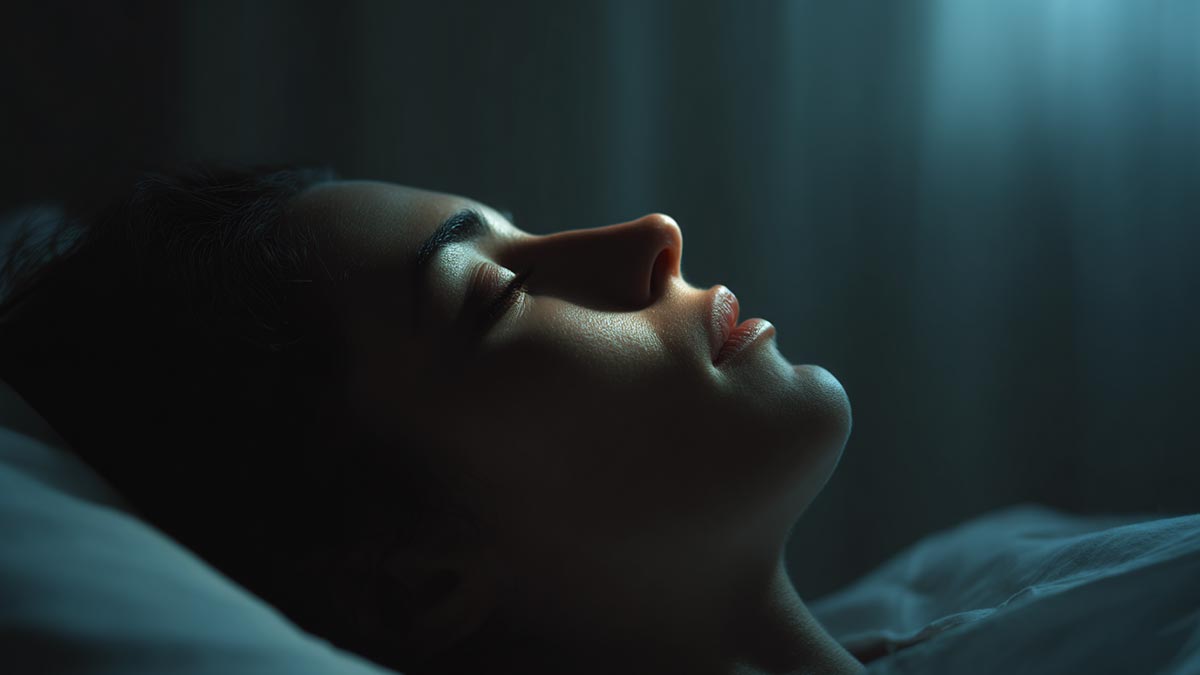
We live in a world that never fully switches off. Street lights bleed through curtains, phone screens glow on nightstands, and LED indicators pulse quietly in the dark. Most of us have simply accepted this as modern life. But what if this constant exposure to artificial light at night is quietly undermining your brain health, emotional balance, and mental resilience — and what if the fix is as simple as sleeping in complete darkness?
The science behind this is more compelling than most people realize. Total darkness during sleep isn’t just a comfort preference — it’s a biological necessity that your brain has been wired for since long before electricity existed.
The Neuroscience Behind Darkness and Brain Health
To understand why darkness matters so much, you need to understand what happens inside your brain when the lights go out — truly go out.
The absence of light signals your brain to begin producing melatonin, the hormone that governs your sleep-wake cycle. But melatonin does far more than make you feel drowsy. When its production is allowed to peak — as it can only do in genuine darkness — it sets off a chain of restorative neurological processes that reinforce memory consolidation, strengthen neural connections, and activate the brain’s glymphatic system, which clears out metabolic waste products accumulated during the day.
Research has consistently shown that this melatonin-driven restorative activity enhances a range of cognitive functions — from sharper memory recall and improved problem-solving capacity to heightened creativity and sustained mental focus. In short, the darkness you sleep in isn’t passive. It’s actively rebuilding and optimizing your brain while you rest.
Even modest amounts of ambient light during sleep have been shown to interfere with this process — reducing melatonin output, fragmenting sleep cycles, and leaving the brain without the full restoration it needs.
Darkness and Mental Health: A Connection Science Can’t Ignore
The relationship between light exposure and mental health is one of the more underappreciated areas of sleep science. Disruptions to the body’s circadian rhythm — the internal 24-hour clock that governs nearly every biological function — are strongly associated with mood disorders including depression, anxiety, and emotional dysregulation.
When you sleep in an environment flooded with artificial light, your circadian rhythm is thrown off. The downstream consequences include impaired production of serotonin and dopamine — the neurotransmitters most closely linked to mood stability, motivation, and emotional resilience.
By contrast, consistently sleeping in total darkness helps keep your circadian rhythm properly calibrated. This supports balanced hormone production, more restorative sleep architecture, and a stronger baseline capacity for managing stress and regulating emotions. For people navigating anxiety, burnout, or persistent low mood, this is not a trivial benefit. It can be genuinely transformative.
In a mental health landscape where pharmaceutical interventions are often the first line of response, the idea that something as accessible as a darker bedroom could meaningfully shift your psychological wellbeing deserves far more attention than it typically receives.
How to Create a Sleep Environment That’s Truly Dark
Understanding the value of darkness is one thing — actually achieving it in a modern home is another. Most bedrooms, even with curtains drawn, allow in more light than we consciously register.
Here’s what a genuinely sleep-optimized dark environment involves:
Eliminate all artificial light sources. This means phone screens, television standby lights, router indicator lights, digital clocks, and any other device that emits even a faint glow. If a device can’t be turned off, cover it.
Use blackout curtains or blinds. Standard curtains allow significant light infiltration from streetlights, passing vehicles, and neighboring properties. True blackout curtains make a measurable difference.
Consider a sleep mask. For environments where complete darkness is difficult to achieve — travel, shared spaces, irregular schedules — a quality sleep mask is a practical and effective alternative.
Dim your environment progressively in the evening. The transition to darkness doesn’t need to begin only when you get into bed. Reducing light levels in your home for one to two hours before sleep gives melatonin production a head start and makes falling asleep easier.
The Broader Picture: Light, Darkness, and How We Live
The impact of sleeping in total darkness can’t be fully appreciated without looking at the broader pattern of light exposure woven through modern daily life.
Blue-wavelength light — the type emitted most intensely by smartphones, tablets, computer screens, and LED lighting — is particularly disruptive to melatonin production. It signals to your brain that it’s still daytime, suppressing the very hormonal cascade your body needs to initiate quality sleep. Chronic exposure to blue light in the evenings is now linked not just to sleep disruption but to elevated risk of metabolic disorders, immune dysfunction, and cardiovascular complications.
- → Nationwide Listeria Recall in France: What You Need to Know About Contaminated Pâtés and Cold Meats in 2026
- → The Unexpected Household Hack That Keeps Wet Floors and Entryways Clean in 2026
- → The Hair Transformation Women Over 50 Are Talking About in 2026: What Really Works for Thinning Hair
- → Marseille’s Mistral District in Crisis: Arrests, Secrets, and a Growing Mystery in 2026
- → Massive 35-Meter Waves in the Pacific: What Scientists Are Discovering in 2026
- → Why You’re Receiving More Spam Calls in 2026: The Hidden Reasons and How to Stop Them
- → The Express Chignon: A Quick and Elegant Hairstyle for Busy Women in 2026
Intentionally building periods of reduced light exposure into your daily routine — not just at bedtime — can begin to counteract these effects. Dimming household lights after sunset, stepping outside into natural evening darkness, and establishing a genuine digital wind-down period before bed all contribute to restoring the light-dark balance your biology was designed to operate within.
There is also a psychological dimension to this that’s worth acknowledging. Many people who begin spending more time in natural darkness — whether through evening walks, screen-free evenings, or simply sitting quietly in a dim room — report a heightened sense of calm, presence, and connection to their own internal rhythms. Darkness, for all its cultural associations with fear and the unknown, can be profoundly grounding.
The Ongoing Debate: Is Complete Darkness Always the Answer?
The science strongly supports darkness as the default sleeping environment — but the conversation is more nuanced than a simple “lights off” prescription.
Some researchers point out that not all light is equally disruptive. While blue-spectrum light is highly melatonin-suppressive, warmer wavelengths — amber, red, and low-intensity orange — have a significantly smaller impact on circadian function. This has led to a growing interest in the use of warm-toned, low-intensity lighting for evening environments as a practical middle ground for people who find complete darkness uncomfortable or impractical.
The broader principle that emerges from the research is not rigidity but intentionality. The goal is to be deliberate about your light environment — particularly in the hours surrounding sleep — rather than simply accepting whatever ambient light your environment provides by default.
Darkness Beyond the Bedroom: Practical Applications in Daily Life
The benefits of strategic darkness aren’t confined to nighttime sleep. Incorporating intentional low-light periods throughout the day can support cognitive performance, emotional regulation, and interpersonal connection in ways that are surprisingly practical.
| Everyday Context | How Intentional Darkness Helps |
|---|---|
| Work and productivity | Short breaks in dimly lit spaces allow mental fatigue to lift and improve focus upon return |
| Personal relationships | Low-light environments during social time encourage presence, attentiveness, and emotional intimacy |
| Relaxation and stress relief | Darkness activates the parasympathetic nervous system, reducing physiological stress responses |
| Mindfulness and self-awareness | Natural darkness, particularly outdoors, sharpens sensory awareness and supports mental stillness |
Brief midday periods in reduced light — away from screens and fluorescent overhead lighting — have been shown to support cognitive recharge in ways that additional caffeine simply cannot replicate. The brain responds to darkness as a cue to consolidate and restore, regardless of whether sleep follows.
Conclusion
In the relentless brightness of contemporary life, total darkness has become something of a lost resource. We’ve engineered it out of our homes, our evenings, and our sleep environments without fully considering what we’ve given up in the process.
What the science is telling us — clearly and consistently — is that darkness is not merely the absence of light. It is an active biological condition that your brain needs to repair itself, regulate your emotions, consolidate your memories, and maintain the hormonal balance that underlies mental health.
The good news is that reclaiming this resource requires no prescription, no expensive intervention, and no dramatic lifestyle overhaul. It begins with a darker bedroom, a more intentional evening routine, and a willingness to let the night be what it was always meant to be — genuinely, restorative dark.
Your brain has been waiting for this. Give it the darkness it deserves.
Frequently Asked Questions
How dark does a bedroom need to be to get the full sleep benefits? Experts recommend aiming for complete darkness — an environment where you genuinely cannot see your hand in front of your face. Even low levels of ambient light can measurably suppress melatonin production and disrupt sleep quality. Blackout curtains combined with covering any indicator lights in the room is the most effective approach.
Does using a phone or screen before bed cancel out sleeping in total darkness? Partially. Blue light exposure from screens in the hour or two before sleep suppresses melatonin and delays the onset of the body’s sleep preparation process. Sleeping in darkness afterward partially mitigates this, but the ideal approach is to reduce screen exposure at least one to two hours before bed and sleep in total darkness.
What if I can’t fully block out light in my sleeping space? A quality sleep mask is a highly effective alternative. If you prefer not to use one, even incremental improvements — heavier curtains, covering device lights, using amber nightlights instead of white — can meaningfully improve your sleep environment without requiring complete blackout conditions.
How quickly can I expect to notice improvements from sleeping in total darkness? Many people report noticeable changes in sleep depth and morning alertness within one to two weeks of consistently sleeping in a darker environment. The longer-term cognitive and mental health benefits tend to accumulate gradually over months of sustained practice.
Can too much darkness be harmful? In certain contexts, yes. Extended periods without adequate light exposure during waking hours — particularly natural daylight — can negatively affect mood, vitamin D synthesis, and circadian regulation. The goal is darkness during sleep and appropriate light exposure during the day, not a wholesale avoidance of light.
Is sleeping in total darkness beneficial for children and teenagers? Yes, and arguably more so than for adults. Developing brains are particularly sensitive to the quality of sleep and the hormonal environment during rest. Establishing dark, screen-free sleep environments for children and adolescents supports healthy neurological development, emotional regulation, and academic performance.
Can sleeping in darkness help with depression or anxiety? Research suggests it can play a meaningful supportive role. Since circadian disruption is closely linked to mood disorders, restoring proper sleep architecture through darkness-enhanced sleep can help stabilize mood, reduce anxiety symptoms, and improve the effectiveness of other mental health interventions. It is not a replacement for professional treatment but a valuable complementary practice.
Should I avoid all light in the evening, or just before bed? The most beneficial approach is to gradually reduce light intensity throughout the evening rather than making an abrupt switch at bedtime. Dimming household lights after sunset, shifting to warmer-toned lighting, and reducing screen brightness two hours before bed creates a gradual hormonal transition that makes both falling and staying asleep significantly easier.



Leave a comment