

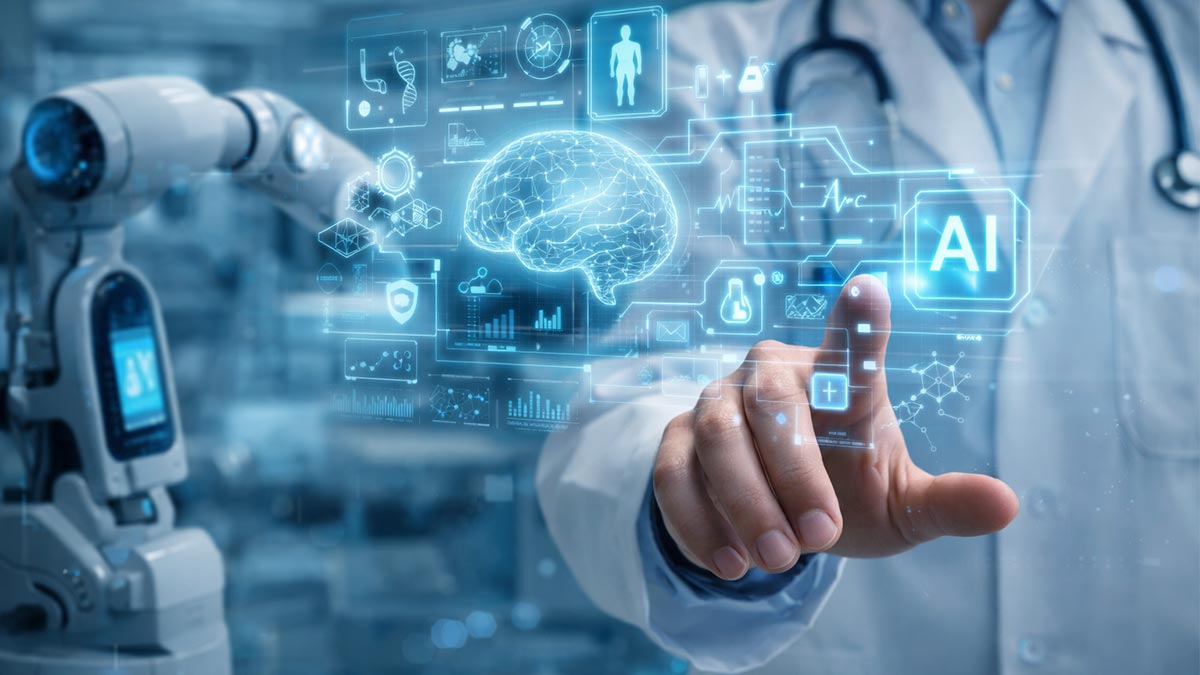
The healthcare industry is undergoing a dramatic transformation as artificial intelligence begins to reshape how medical problems are identified and treated. Tasks that once required weeks or even months of effort from teams of specialists can now be completed in a fraction of the time. By 2026, AI has moved beyond experimental use and is actively supporting clinical decision-making, diagnostics, and treatment planning across the globe.
This shift is not about replacing doctors but enhancing their capabilities. With access to vast datasets and advanced algorithms, AI is helping healthcare providers make faster, more precise, and highly personalized decisions, ultimately improving patient outcomes.
A New Approach to a Longstanding Challenge: Premature Births
Premature birth remains one of the most serious global health concerns, affecting millions of families each year. Traditionally, identifying high-risk pregnancies and planning appropriate care required time-consuming analysis and often involved uncertainty.
AI is now changing that landscape. By analyzing large volumes of medical data, including patient history, genetic factors, and environmental influences, AI systems can quickly detect patterns that indicate a higher risk of premature delivery. This allows healthcare providers to intervene earlier and offer targeted care when it matters most.
One of the most significant advancements is the ability of AI to design personalized treatment strategies within minutes. Instead of relying on trial-and-error approaches, clinicians can now use AI-driven insights to determine the most effective course of action for each patient.
Faster and More Accurate Diagnosis
AI is also revolutionizing how diseases are detected. In areas such as cancer diagnosis, traditional methods often require extensive manual analysis of imaging and tissue samples. This process can be time-intensive and subject to human variability.
With AI-powered tools, medical images can be analyzed rapidly and with remarkable precision. These systems are capable of identifying subtle abnormalities that may be missed during manual review. As a result, diagnoses can be made earlier, increasing the chances of successful treatment.
This speed does not just save time; it can save lives. Early detection is often the key factor in improving survival rates for many serious conditions.
Personalized Treatment and Precision Medicine
One of the most promising developments in AI-driven healthcare is the rise of precision medicine. Instead of applying the same treatment to all patients, doctors can now tailor therapies based on individual characteristics such as genetics, lifestyle, and medical history.
AI plays a crucial role in this process by analyzing complex datasets and identifying the most effective treatment options for each individual. In fields like oncology, this means targeting the specific mutations driving a patient’s cancer rather than using generalized therapies.
This personalized approach leads to better outcomes, fewer side effects, and more efficient use of healthcare resources.
Enhancing Efficiency in Healthcare Systems
Beyond diagnosis and treatment, AI is improving the overall efficiency of healthcare systems. Administrative tasks, patient monitoring, and data management can be streamlined through automation, allowing healthcare professionals to focus more on patient care.
- → Nationwide Listeria Recall in France: What You Need to Know About Contaminated Pâtés and Cold Meats in 2026
- → The Unexpected Household Hack That Keeps Wet Floors and Entryways Clean in 2026
- → The Hair Transformation Women Over 50 Are Talking About in 2026: What Really Works for Thinning Hair
- → Marseille’s Mistral District in Crisis: Arrests, Secrets, and a Growing Mystery in 2026
- → Massive 35-Meter Waves in the Pacific: What Scientists Are Discovering in 2026
- → Why You’re Receiving More Spam Calls in 2026: The Hidden Reasons and How to Stop Them
- → The Express Chignon: A Quick and Elegant Hairstyle for Busy Women in 2026
By reducing unnecessary procedures and optimizing treatment plans, AI also helps lower costs and minimize waste. This makes healthcare more accessible, especially in regions where resources are limited.
The Importance of Human-AI Collaboration
Despite its capabilities, AI is not a substitute for human expertise. The most effective healthcare systems combine the strengths of both technology and medical professionals.
AI excels at processing large amounts of data and identifying patterns, while doctors bring clinical experience, empathy, and critical judgment. Together, they create a balanced approach that ensures both accuracy and compassionate care.
This collaboration is essential for maintaining trust and delivering high-quality outcomes in an increasingly technology-driven environment.
Ethical Challenges and Responsible Use
As AI becomes more integrated into healthcare, ethical considerations are becoming increasingly important. One major concern is the risk of bias in AI systems. If the data used to train these systems is not diverse or representative, it may lead to unequal treatment outcomes.
Protecting patient privacy is another critical issue. AI relies on large volumes of sensitive medical data, making strong data security measures essential.
Transparency is equally important. Healthcare providers must understand how AI systems arrive at their conclusions to ensure accountability and safe decision-making. Addressing these challenges is key to building trust in AI-driven healthcare solutions.
Limitations of AI in Medicine
While AI offers significant advantages, it is not without limitations. Its effectiveness depends heavily on the quality and completeness of available data. In cases where data is limited or inconsistent, AI may struggle to provide accurate insights.
Additionally, AI cannot fully replicate the human aspects of care, such as empathy, ethical reasoning, and patient communication. Complex or rare medical cases often require human intuition and experience that go beyond algorithmic analysis.
The Future of AI in Healthcare
Looking ahead, AI is expected to play an even greater role in shaping the future of medicine. Continued advancements in machine learning, data integration, and digital health technologies will further enhance its capabilities.
However, the focus will remain on collaboration rather than replacement. By combining technological innovation with human expertise, healthcare systems can achieve a balance that maximizes benefits while minimizing risks.
Conclusion
Artificial intelligence is redefining what is possible in modern healthcare. From predicting premature births to enabling faster diagnoses and personalized treatments, AI is transforming the way medical care is delivered. Its ability to process complex data quickly and accurately offers significant advantages, but it also comes with important responsibilities.
The future of healthcare lies in a partnership between humans and machines. By addressing ethical concerns, ensuring data security, and maintaining human oversight, AI can be used to enhance—not replace—the role of healthcare professionals. This balanced approach has the potential to improve outcomes, expand access to care, and usher in a new era of medical innovation.
FAQs
What makes AI faster than traditional medical methods
AI can process large amounts of data in seconds, allowing it to identify patterns and generate insights much faster than human teams
How does AI help in preventing premature births
It analyzes risk factors and medical data to identify high-risk pregnancies early, enabling timely intervention
Is AI more accurate than doctors in diagnosis
AI can be highly accurate in data analysis, but it works best when combined with human expertise
What are the risks of using AI in healthcare
Potential risks include data privacy issues, algorithmic bias, and lack of transparency in decision-making
Can AI replace doctors in the future
No, AI is designed to support doctors, not replace them, as human judgment and empathy remain essential




Leave a comment