

The Scene That Says Everything About Aging With Dignity
It’s just past eight in the morning inside a modest senior wellness center. The faint aroma of coffee mingles with the scent of clean floors. Chairs shift across linoleum, someone laughs a little too loudly, and right in the center of it all, a silver-haired woman named Denise — 72 years old — grips a yellow resistance band with quiet determination.
She isn’t here chasing youth. She’s here because last winter, she needed her grandson’s help to get out of the bathtub.
The people around her move deliberately, unhurriedly, with a kind of understated stubbornness. They lower themselves into chairs and rise back up. They march gently in place. They reach upward as though retrieving something from a high shelf. Nothing about it looks dramatic. No one is chasing a fitness transformation.
Someone in the back quips: “We’re training for the Olympics of getting out of bed by ourselves.”
Everyone laughs. But no one is entirely joking.
Why the Right Kind of Movement Changes Everything After 60
The Myth That’s Quietly Costing People Their Independence
There’s a widespread and genuinely harmful belief that once you pass 60, the wisest thing you can do is slow down and conserve your energy. Anyone who has watched a parent or grandparent gradually lose their ability to manage daily life on their own understands exactly what that belief costs.
The real threshold in aging isn’t the appearance of wrinkles or gray hair. It’s the moment when ordinary, everyday movements begin to require assistance.
Rising from the sofa without pressing your palms into your knees. Lifting a bag of groceries without bracing yourself. Rotating your neck to check a blind spot while driving. These abilities don’t vanish all at once. They diminish quietly, almost imperceptibly, until one day you realize you’ve begun structuring your entire day around avoiding staircases.
What the Research Actually Shows
The goal of a well-designed routine after 60 isn’t to transform a 68-year-old into an athlete. It’s to keep those small, essential movements functional for as long as possible.
Researchers use the term functional capacity to describe something deeply practical: the ability to live your daily life without constantly depending on someone else’s help. A significant study conducted at Tufts University found that older adults who engaged in basic strength and balance exercises just two to three times per week were considerably less likely to lose their independence over the following years. Not competitive athletes — simply people doing chair stands and working with light resistance.
Why Muscles, Balance, and Joints All Need to Be Challenged
The underlying logic is straightforward and unsparing. Muscles that go unused diminish. Balance that is never challenged gradually deteriorates. Joints that rarely move through their full range of motion progressively stiffen. After 60, this process accelerates — but it is not irreversible.
Strength training communicates to the body: we still need this capacity. Balance work signals to the brain: keep these reflexes active. A routine built around three core pillars — strength, balance, and mobility — doesn’t reverse the aging process. But it meaningfully slows the decline. It buys time. It preserves options.
Even two sessions per week, maintained consistently, can represent the difference between “I can still manage this” and “I need someone to help me.”
A Realistic Week-by-Week Routine for Staying Independent After 60
What It Actually Looks Like in Practice
Here is what a practical, home-based independence-preserving routine can look like after 60: three sessions per week, roughly 20 to 30 minutes each, requiring no specialized equipment.
Block One — Leg Strength Sit in a sturdy chair with your feet flat on the floor and your arms folded across your chest if comfortable. Rise slowly to standing, then lower yourself back down with control. Begin with five repetitions. Rest briefly. Complete three sets. This single movement builds the exact strength needed for stairs, toilets, car seats, and sofas.
- → Nationwide Listeria Recall in France: What You Need to Know About Contaminated Pâtés and Cold Meats in 2026
- → The Unexpected Household Hack That Keeps Wet Floors and Entryways Clean in 2026
- → The Hair Transformation Women Over 50 Are Talking About in 2026: What Really Works for Thinning Hair
- → Marseille’s Mistral District in Crisis: Arrests, Secrets, and a Growing Mystery in 2026
- → Massive 35-Meter Waves in the Pacific: What Scientists Are Discovering in 2026
- → Why You’re Receiving More Spam Calls in 2026: The Hidden Reasons and How to Stop Them
- → The Express Chignon: A Quick and Elegant Hairstyle for Busy Women in 2026
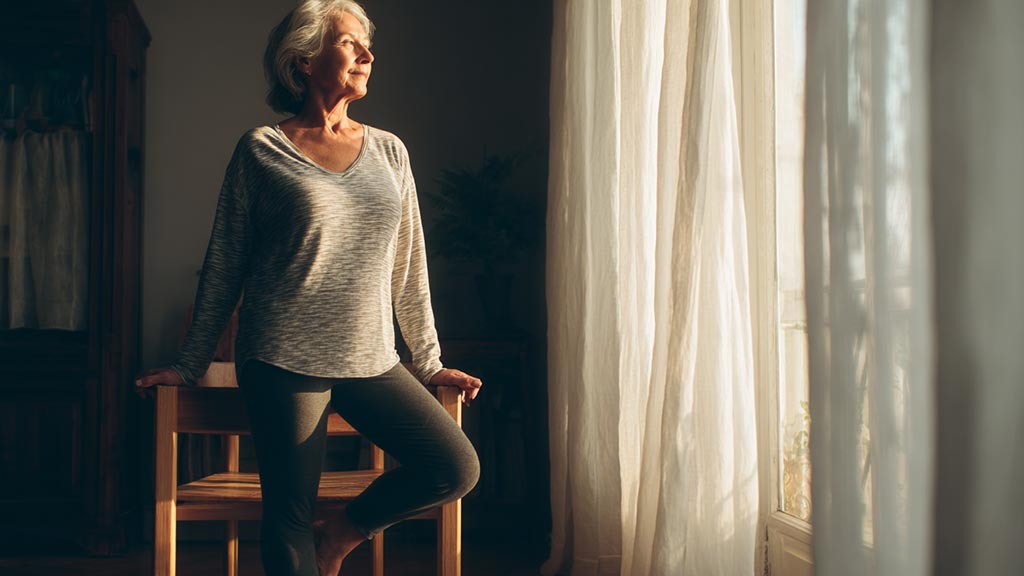
Block Two — Balance Stand behind the chair and rest one hand lightly on the back for support. Lift one foot a few centimeters off the floor and hold the position for 10 to 20 seconds. Switch legs. Repeat three times on each side. As your confidence grows over the following weeks, gradually reduce your grip — first to fingertips, eventually to no hands at all.
Block Three — Mobility Gentle, unhurried movements: slow side-to-side neck rotations, shoulder rolls, ankle circles performed while seated. On paper, this combination appears almost too simple. In daily life, it’s precisely what allows you to dress yourself, prepare meals, and step safely into a shower or bathtub without anxiety.
The Mindset Mistakes That Derail Most People
Many people begin with genuine commitment, then abandon the routine the moment life creates an interruption — a short trip away, a seasonal cold, grandchildren visiting for a week. They interpret the gap as failure and walk away from the habit entirely.
This all-or-nothing thinking is the single greatest obstacle at this stage. Progress after 60 is rarely linear. Some weeks your body feels capable and responsive. Other weeks your legs feel unreliable and heavy. Both are normal. Both are part of the process.
There’s also the opposite trap: overcompensating out of fear. Some people, jolted by a health scare, attempt to make up for lost time with long and intense sessions — and promptly injure themselves. The purpose of this routine is continuity, not heroism. You should finish each session feeling pleasantly warm and quietly satisfied, not depleted.
On difficult days, cut the session in half. Or simply do the balance portion alone. That still counts. Your body responds far more to what you repeat consistently than to what you did once, courageously, several weeks ago.
As Michel, 69, put it after recovering from a fall: “Everyone told me to rest. Rest was exactly what was making things worse. When my physiotherapist showed me how to stand up from a chair ten times in a row, I thought it seemed pointless. Three weeks later I could climb the stairs to my own bedroom again. That’s when it clicked — these small exercises were me taking my life back.”
A Simple Weekly Framework to Follow
To summarize what a sustainable routine looks like in practice:
Two to three short sessions weekly provide enough stimulus to maintain strength and balance without creating fatigue or increasing injury risk. Movements you already recognize — chair stands, slow heel-to-toe walking, gentle stretching in your living room — require no learning curve and no special setting. Legs and balance deserve priority because loss of lower-body strength and balance is most directly linked to falls, which remain the leading cause of lost independence in older adults. Light upper-body work — wall push-ups, lifting water-filled bottles — preserves your ability to carry shopping, open jars, and manage everyday physical tasks. And most importantly, the routine should fit your life, not compete with it. Ten minutes after the evening news. Five minutes before bed. Repeated gently, week after week.
Independence Is Also a Decision You Make Every Day
The Mental Side of Staying Capable
Spend time with people over 60 who are still living fully and independently, and a consistent pattern emerges beyond the physical habits. Yes, they walk. They strengthen. They stretch. But they also make a quiet, daily decision not to shrink their world prematurely. They still walk to the market rather than ordering everything to their door. They still take the stairs occasionally, just to keep the legs honest, as one woman put it.
There’s a genuine and understated bravery in that. Fear of falling, fear of pain, fear of embarrassment in a group exercise class — these are real and legitimate concerns. Yet these same people describe lighting up weeks later when they realize they can carry their laundry basket up the stairs without pausing to catch their breath. That small, private victory often carries more motivational power than any wellness program or inspirational message.
Start From the Gesture You’re Not Ready to Give Up
This is where a useful question emerges: what is the one everyday action you most want to still be doing at 75, at 80, perhaps at 90? Tying your own shoes. Kneeling in a garden. Lifting a grandchild. Stepping unaided into a car.
Start from that image. Build your routine not around your age, but around that specific gesture you’re not willing to surrender. Then let each session be a quiet, deliberate vote for the version of yourself you intend to remain.
Quick Reference: Key Takeaways
| Key Point | What It Involves | Why It Matters |
|---|---|---|
| Prioritize leg strength | Chair stands, step-ups, slow controlled lowering movements | Directly supports the ability to use stairs, rise from seats, and move safely |
| Train balance consistently | Single-leg stands, heel-to-toe walking, gradual reduction of support | Reduces fall risk and preserves confidence during everyday movement outdoors |
| Keep sessions short and regular | 20–30 minutes, two to three times per week, adaptable on difficult days | Maximizes the likelihood of long-term consistency over short-term intensity |
Conclusion
The ability to live independently — to move through your own home, manage your own errands, and navigate your own days without constant assistance — is one of the most meaningful things a person can protect as they age. It doesn’t require an extraordinary commitment. It doesn’t demand a gym membership, specialized equipment, or hours of daily effort. What it requires is consistency, honesty about where you currently are, and the willingness to show up two or three times a week for movements that may feel almost too simple to matter. They are not too simple. They are precisely calibrated to the thing that matters most: keeping you capable, confident, and in charge of your own life for as many years as possible.
Frequently Asked Questions
What if I’ve never exercised before and I’m already in my seventies? Beginning late is still genuinely worthwhile. Start with seated exercises, very small ranges of motion, and balance practice while holding on with both hands for full support. If accessible, a brief consultation with a physiotherapist to review your starting routine is a sound investment. Early gains are often surprisingly rapid, even for complete beginners.
How do I know when an exercise is too demanding for me? A useful benchmark: you should be able to speak in short sentences throughout the movement without gasping for breath. Sharp or sudden pain, or any discomfort that persists for more than a day afterward, is a clear warning sign to stop and reassess. Mild muscle warmth or fatigue is entirely normal and expected. If your form begins to break down, reduce your repetitions, add support, or simplify the movement.
Can regular walking be enough to preserve my independence? Walking is genuinely valuable for cardiovascular health and emotional wellbeing, but it does not adequately replace dedicated strength and balance training. It rarely challenges the leg muscles intensely enough to prevent meaningful loss of power, and it doesn’t develop the rapid stabilization reflexes that protect against falls. Consider walking your foundation, and strength and balance work your protective structure built on top of it.
Do I need weights or resistance bands to get started? Not initially. Your own bodyweight, a stable chair, a wall for support, and a pair of water bottles if you want light resistance are entirely sufficient to begin. Bands or dumbbells can add useful challenge once the foundational movements feel genuinely easy — but equipment is never the priority. Showing up consistently is.
How soon will I notice real changes in my daily life? Many people report meaningful small improvements within three to four weeks — rising from a chair feels less effortful, climbing stairs produces less breathlessness. More substantial shifts in confidence, stamina, and overall sense of physical capability typically emerge around the eight to twelve week mark, provided the sessions continue even when imperfect or abbreviated.



Leave a comment