

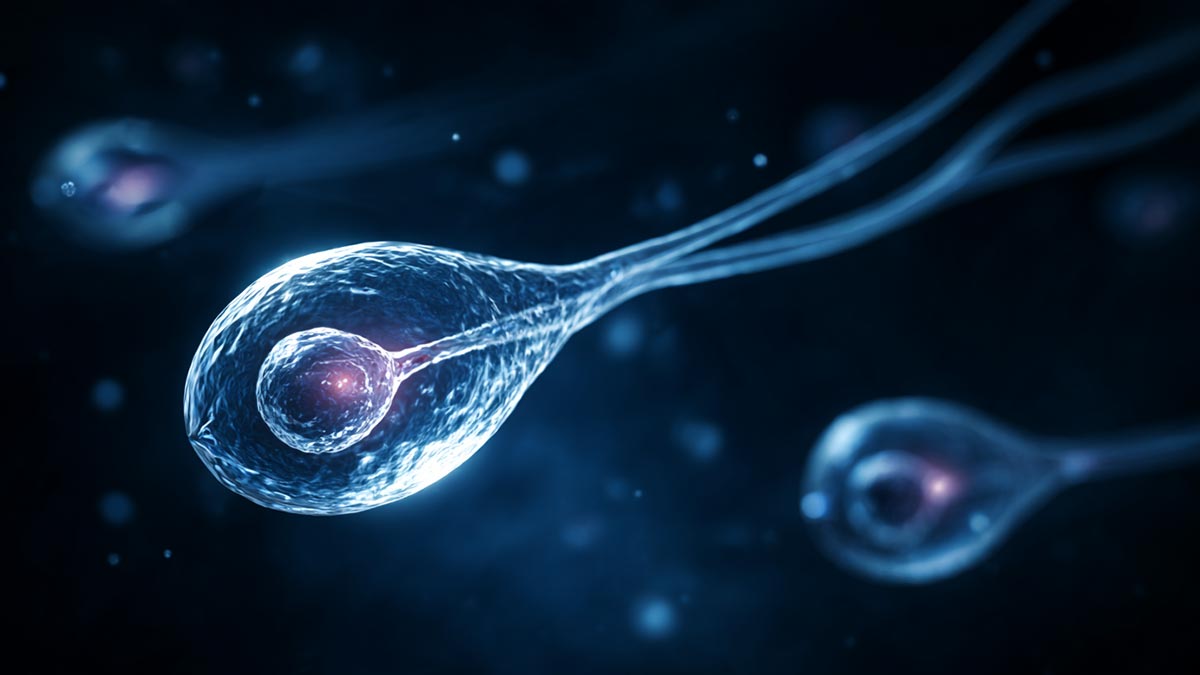
As humanity moves closer to long-term space missions and potential colonization, scientists are uncovering surprising biological challenges. One of the latest discoveries suggests that microgravity could interfere with how sperm navigate, raising concerns about reproduction beyond Earth.
Recent research from University of Adelaide highlights how the absence of gravity may disrupt sperm behavior—an issue that could affect both humans and animals in space.
Why Space Travel Could Affect Fertility
In space, the lack of gravity alters many biological processes. While much attention has been given to muscles, bones, and circulation, reproductive health is now emerging as a critical area of concern.
This study reveals that sperm may struggle to orient themselves properly in microgravity, making it harder to reach and fertilize an egg.
How Scientists Simulated Microgravity on Earth
To study this phenomenon, researchers used a specialized device called a 3D clinostat. This machine continuously rotates biological samples, effectively removing the sense of “up” and “down” that gravity provides.
Experiment Overview
- Sperm samples from humans, pigs, and rodents were tested
- A channel mimicking the female reproductive tract was created
- Scientists observed how sperm navigated this pathway under simulated microgravity
The results showed that sperm behaved as if they were disoriented—similar to being spun around and asked to find a path forward.
Key Finding: Sperm Lose Direction, Not Movement
According to biologist Nicole McPherson, the most striking discovery was:
- Sperm still moved normally (motility unchanged)
- But significantly fewer sperm successfully reached their destination
This indicates that the issue is not movement itself, but navigation.
👉 In simple terms: sperm can still swim—but they don’t know where they’re going.
What Causes This Disorientation?
While the exact mechanism is still under investigation, researchers suggest:
- Gravity may help sperm maintain contact with surfaces
- These surfaces likely provide directional cues
- Without gravity, sperm may lose these physical signals
However, sperm don’t rely solely on gravity.
Chemical Signals Can Help Sperm Find Their Way
Interestingly, scientists found that sperm could still be guided under microgravity using chemical cues, particularly the hormone Progesterone.
What This Means
- Strong chemical signals can override the lack of gravity
- Sperm may still reach the egg using chemotaxis (chemical navigation)
- This suggests a potential adaptive mechanism
👉 Even in space, biology may find a workaround—but it’s not guaranteed to be efficient.
Fertilization Rates Drop in Microgravity
The study also revealed deeper concerns beyond navigation.
Key Results from Mouse Experiments
- Sperm exposed to microgravity for 4–6 hours
- Resulted in 30% lower fertilization success
- Longer exposure led to:
- Delayed embryo development
- Fewer cells forming early-stage embryos
These findings suggest that microgravity may affect not just fertilization—but early development as well.
Supporting Evidence from Earlier Research
This builds on a 2024 study showing that fluctuating gravity conditions can:
- Reduce sperm health
- Decrease motility
- Impact overall reproductive potential
Together, these studies highlight a growing concern about human fertility in space environments.
Why This Matters for Future Space Missions
With increasing interest in long-duration missions and commercial spaceflight, understanding reproduction in space is becoming essential.
Challenges include:
- Microgravity effects on sperm and eggs
- Exposure to cosmic radiation
- Unknown impacts on embryo development
Scientists emphasize that we still lack sufficient data to ensure safe reproduction beyond Earth.
The Road Ahead: More Research Needed
Led by reproductive immunologist Hannah Lyons, the research team stresses the importance of further investigation.
Future studies aim to:
- Understand how gametes (sperm and eggs) respond at a molecular level
- Explore how embryos develop in altered gravity
- Develop strategies to support reproduction in space habitats
Conclusion
The latest findings from 2025–2026 research reveal a fascinating yet concerning reality: microgravity can disrupt sperm navigation and reduce fertilization success. While chemical signals like progesterone may help compensate, the overall efficiency of reproduction appears compromised.
As humanity prepares for longer missions and potential life beyond Earth, understanding how reproduction works in space is no longer optional—it’s essential. Continued research will play a critical role in ensuring that future generations can thrive, not just survive, in extraterrestrial environments.
- → Nationwide Listeria Recall in France: What You Need to Know About Contaminated Pâtés and Cold Meats in 2026
- → The Unexpected Household Hack That Keeps Wet Floors and Entryways Clean in 2026
- → The Hair Transformation Women Over 50 Are Talking About in 2026: What Really Works for Thinning Hair
- → Marseille’s Mistral District in Crisis: Arrests, Secrets, and a Growing Mystery in 2026
- → Massive 35-Meter Waves in the Pacific: What Scientists Are Discovering in 2026
- → Why You’re Receiving More Spam Calls in 2026: The Hidden Reasons and How to Stop Them
- → The Express Chignon: A Quick and Elegant Hairstyle for Busy Women in 2026
FAQs
1. Does microgravity stop sperm from moving?
No, sperm can still move normally, but they lose their sense of direction.
2. Can humans reproduce in space?
It’s still unclear. Early studies suggest challenges, but more research is needed.
3. What helps sperm navigate in microgravity?
Chemical signals like progesterone can guide sperm even without gravity.
4. Does microgravity affect fertilization rates?
Yes, studies show up to a 30% reduction in fertilization success in animal models.
5. Why is this research important?
It helps scientists understand whether long-term human life in space is biologically sustainable.




Leave a comment