

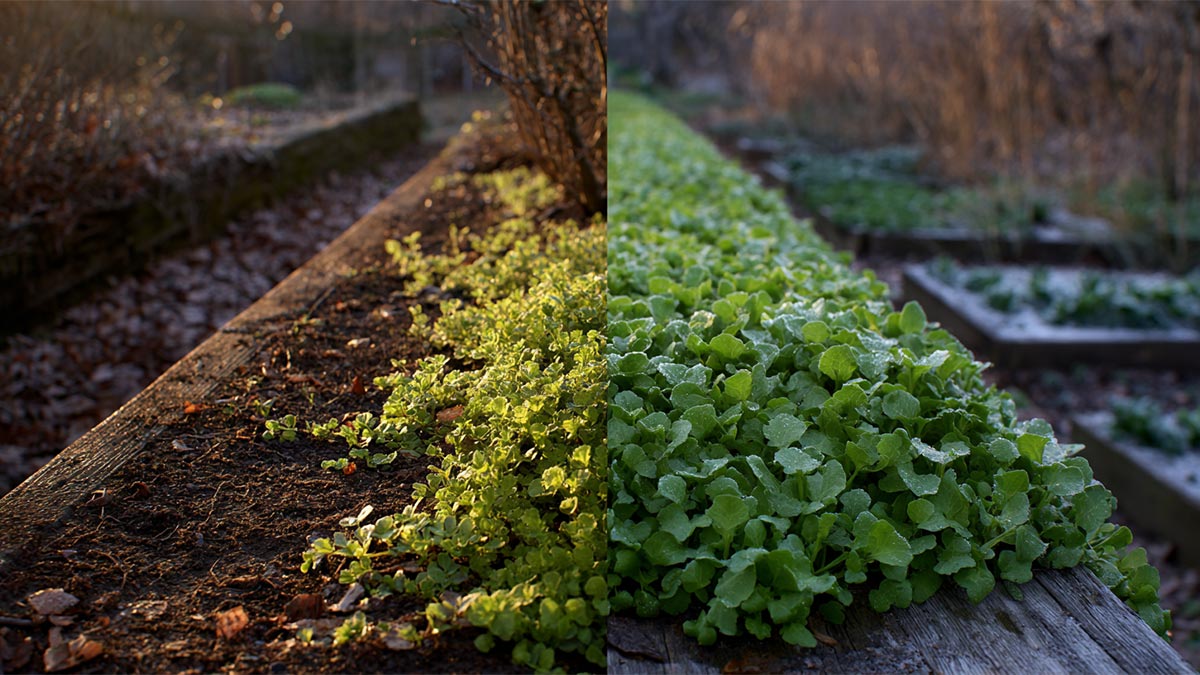
While most gardeners spend winter staring out at bare, lifeless beds and waiting impatiently for spring, a quietly remarkable plant is already out there doing the hard work for them. It doesn’t need coaxing, doesn’t demand attention, and doesn’t ask for perfect conditions. White mustard — a hardy, cold-tolerant brassica — is one of the most underused tools in the home gardener’s arsenal, and once you understand what it does to your soil over the course of a single winter, you’ll wonder why you ever left your beds bare.
What Makes White Mustard Such a Powerful Winter Ally?
A Plant That Thrives When Everything Else Stops
Most plants shut down when temperatures drop. White mustard does the opposite. This resilient brassica can germinate at soil temperatures as low as 5°C — a threshold that most of the garden hasn’t even noticed yet. While the ground still feels cold and the days are still short, white mustard is already pushing roots downward and unfurling its first leaves.
This cold-weather capability makes it uniquely suited to late-winter sowing. Rather than leaving soil bare and exposed through the coldest months — vulnerable to erosion, weed colonisation, and nutrient loss — you can put white mustard to work as a living shield, protecting and enriching the earth beneath it.
From Bare Soil to Green Carpet in Just Ten Days
One of white mustard’s most immediately satisfying qualities is its speed. Scatter the seeds across an empty bed, rake them lightly into the surface, water them in — and within ten days, you’ll have a dense, vibrant green carpet establishing itself across your plot. No other commonly available cover crop establishes this quickly in cold conditions.
That rapid establishment is what gives white mustard its weed-suppressing power. By colonising the soil surface so quickly and densely, it outcompetes opportunistic weeds before they have a chance to take hold — reducing the amount of weeding you’ll need to do when spring arrives.
- → Nationwide Listeria Recall in France: What You Need to Know About Contaminated Pâtés and Cold Meats in 2026
- → The Unexpected Household Hack That Keeps Wet Floors and Entryways Clean in 2026
- → The Hair Transformation Women Over 50 Are Talking About in 2026: What Really Works for Thinning Hair
- → Marseille’s Mistral District in Crisis: Arrests, Secrets, and a Growing Mystery in 2026
- → Massive 35-Meter Waves in the Pacific: What Scientists Are Discovering in 2026
- → Why You’re Receiving More Spam Calls in 2026: The Hidden Reasons and How to Stop Them
- → The Express Chignon: A Quick and Elegant Hairstyle for Busy Women in 2026
The Six-Week Window: Timing Your Cut for Maximum Nitrogen Release
Why Cutting Before Flowering Is Critical
White mustard’s most valuable contribution to your soil happens not while it’s growing, but at the moment you cut it down. The plant’s lush, nitrogen-rich foliage — when cut and left on the surface or incorporated into the soil — begins to decompose and releases a substantial dose of nitrogen directly into the ground. This becomes the natural fertiliser that your spring seedlings will draw on.
The critical rule is this: cut the plants before they flower. Once white mustard sets seed, its energy has already been directed away from the leafy growth that makes it so nutrient-rich. The ideal cutting point is approximately six weeks after sowing — at the moment the plants are at their leafiest and most vigorous, but before any flowers have opened.
The Simple Action That Does the Work
The cutting process couldn’t be more straightforward. Use a pair of garden scissors or pruning shears to sever the plants at their base. Leave the cut material where it falls or dig it shallowly into the top layer of soil. The roots can remain in the ground — they will continue to break down, adding organic matter and maintaining the channels they’ve already created.
Quick Reference Timeline:
| Timing | Action | Benefit |
|---|---|---|
| Late Winter | Scatter and rake in seeds | Rapid germination and weed suppression begins |
| 6 Weeks Later | Cut plants just before flowering | Nitrogen-rich foliage releases nutrients into soil |
| 2–3 Weeks After Cutting | Plant spring crops | Seedlings establish in nutrient-rich, aerated soil |
What White Mustard Does to Your Soil Structure
Deep Roots That Dig So You Don’t Have To
Beyond the nitrogen contribution, white mustard delivers something equally valuable — a profound improvement in soil structure, entirely without any effort on your part. As the plant develops, its deep taproot system drives down through compacted layers of earth, physically opening up channels and pockets throughout the soil profile.
These channels improve aeration — allowing oxygen to reach plant roots more freely — and enhance drainage, preventing the waterlogging that can stunt early spring growth. By the time you’re ready to plant, the soil that once required significant digging and breaking up will feel noticeably looser, lighter, and far easier to work with.
Less Digging, Better Results
For gardeners who dread the annual spring dig, this is significant. Soil that has hosted a white mustard cover crop through winter tends to require minimal cultivation before planting. The roots have already done the structural work; all that remains is to add your seedlings to ground that’s already been prepared from beneath.
The Measurable Impact on Your Harvest
What the Numbers Actually Show
The soil improvements white mustard creates aren’t just theoretical — they translate into tangible gains at harvest time. Research indicates that growing a winter cover crop like white mustard can boost crop yields by as much as 30 percent compared to beds left bare over winter.
The improvement extends beyond quantity. Vegetables grown in soil enriched by a white mustard cover crop tend to develop more fully, with greater size, higher nutrient density, and a noticeably richer flavour. This applies across a wide range of crops — from leafy greens and root vegetables to fruiting plants like tomatoes and peppers.
For the amount of effort involved — scattering seeds once in late winter and making a single cut six weeks later — a potential 30 percent yield increase represents an extraordinary return on investment.
How to Sow White Mustard: A Complete Step-by-Step Guide
What You Need
The requirements are minimal: white mustard seeds, a rake, and water. No special equipment, no soil amendments, no prior preparation beyond clearing obvious debris from the bed.
The Sowing Process
Step 1 — Scatter the seeds: Distribute white mustard seeds evenly across the bed surface, aiming for approximately 30 to 50 seeds per square foot for good coverage.
Step 2 — Rake in lightly: Use a garden rake to work the seeds gently into the top layer of soil, targeting a depth of ½ to 1 inch. This protects the seeds from birds and ensures good soil contact.
Step 3 — Water thoroughly: Give the bed a deep, even watering immediately after sowing. From this point, nature largely takes over.
Step 4 — Cut before flowering: At approximately six weeks, when the plants are lush and full but not yet blooming, cut them at their base and leave the material in place to decompose.
Step 5 — Wait 2 to 3 weeks: Allow the cut material sufficient time to begin breaking down and releasing its nutrients before introducing your spring seedlings.
Understanding the Terminology: Green Manure vs Cover Crop
These two terms appear frequently in sustainable gardening literature and are sometimes used interchangeably — but they have distinct meanings worth understanding:
| Term | Definition |
|---|---|
| Cover Crop | A plant grown primarily to protect bare soil from erosion and weed colonisation during an otherwise fallow period |
| Green Manure | A crop grown specifically to be cut down and incorporated into the soil to improve fertility and organic matter content |
White mustard functions as both simultaneously — it covers and protects the soil while growing, then enriches and feeds it when cut down. This dual role is what makes it such an efficient and cost-effective choice for winter bed management.
Who Should Avoid White Mustard — and What to Plant After It
One Important Caution
White mustard belongs to the brassica family, which also includes cabbage, broccoli, cauliflower, and kale. Gardeners with known sensitivities or allergies to cruciferous plants should avoid using it as a cover crop. In these cases, alternative winter cover crops such as winter rye or oats can provide many of the same soil-improving benefits without the allergy risk.
What Grows Best After White Mustard
The nitrogen-rich, well-structured soil that white mustard leaves behind is an ideal starting point for a broad range of spring and summer crops. Particularly good choices include:
- Leafy greens — lettuce, spinach, kale, and chard, which respond strongly to nitrogen availability
- Root vegetables — carrots, beetroot, and parsnips, which benefit from the improved soil looseness
- Fruiting crops — tomatoes, peppers, and courgettes, which need both nitrogen and good drainage
- Legumes — which will continue the soil enrichment cycle by fixing their own nitrogen
The one crop type to avoid planting immediately after white mustard is other brassicas — cabbage, broccoli, Brussels sprouts, and similar — as growing related plants in the same ground in successive seasons increases the risk of soil-borne brassica diseases.
Can White Mustard Be Grown Alongside Other Crops?
In most cases, it’s most effective to allow white mustard to occupy the bed exclusively during the winter period, without competition from other plants. However, garlic and shallots — which are planted in autumn and overwinter in the ground — can coexist comfortably with a white mustard cover crop, as they occupy different soil layers and don’t compete significantly for the same resources.
Conclusion
White mustard is the definition of a high-return, low-effort garden investment. A single late-winter sowing — taking no more than a few minutes — sets in motion a chain of soil-improving processes that continues for months: weeds are suppressed, soil structure is opened up by deep taproots, and when the plants are cut just before flowering, a meaningful dose of natural nitrogen is released directly into the ground. By the time you’re ready to plant your spring crops, the beds that were bare and compacted just weeks before will be loose, fertile, and primed for growth. Research supports what experienced gardeners already know from practice — yield increases of up to 30 percent are achievable simply by managing your soil through winter rather than leaving it to chance. Whether you’re growing tomatoes, salad leaves, or root vegetables, white mustard gives your seedlings the best possible start without asking much from you in return.
Frequently Asked Questions
Can I grow other crops in the same bed as white mustard during winter? It’s generally best to let white mustard occupy the bed alone. The one exception is garlic or shallots, which can coexist without competing, as they grow at a different soil depth.
How deep should white mustard seeds be sown? Aim for a sowing depth of ½ to 1 inch. This ensures adequate soil contact for germination while offering some protection from birds.
Can the cut mustard plants go into the compost? Absolutely. Cut white mustard foliage is an excellent compost addition — it’s nitrogen-rich and helps balance out carbon-heavy materials like dry leaves or cardboard.
What happens if I miss the cutting window and the plants flower? Don’t worry unduly — the plants will still contribute organic matter and some soil benefit even after flowering. The nitrogen release is simply less concentrated than when cut at the pre-flowering stage.
Does white mustard work in raised beds? Yes, it performs very well in raised beds. The taproot system improves aeration and drainage, and the dense canopy suppresses weeds just as effectively as it does in open ground.
How long should I wait after cutting before planting spring crops? Allow approximately 2 to 3 weeks after cutting for the organic matter to begin breaking down and for the nitrogen to become available in the soil before introducing seedlings.
Which vegetables benefit most from being planted after white mustard? Leafy greens, root vegetables, and fruiting crops like tomatoes and peppers all respond well. Avoid planting other brassicas immediately after — rotate these to a different bed to prevent disease build-up.
Is white mustard safe around pets? White mustard is generally considered non-toxic to pets, but it’s sensible to discourage animals from digging in or grazing on freshly seeded or recently cut beds as a general precaution.




Leave a comment