

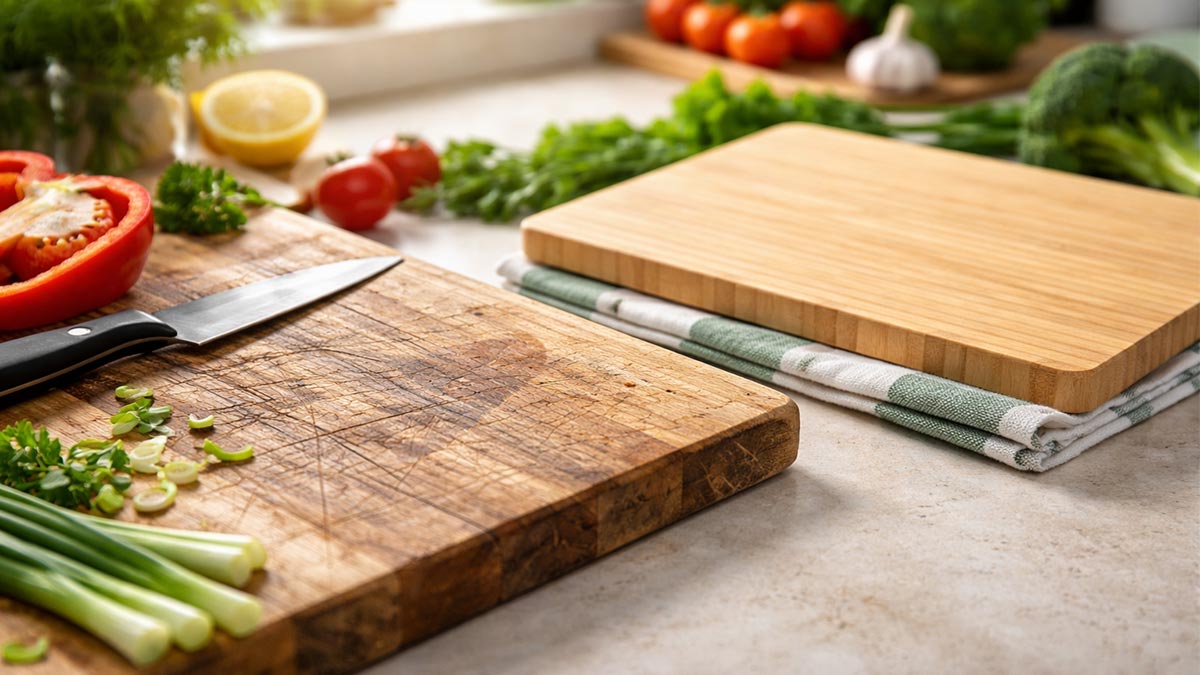
A cutting board is one of the most frequently used tools in any kitchen, yet it is also one of the most overlooked when it comes to hygiene. While many people focus on cleaning their utensils and cookware, the condition of the cutting board is often ignored. What may seem like a harmless surface can actually become a hidden source of harmful bacteria if not maintained or replaced properly.
Food safety experts in 2026 continue to emphasize that improper cutting board care is a major contributor to cross-contamination in home kitchens. Understanding when and why to replace your cutting board is essential for protecting your health and preventing foodborne illnesses.
The Hidden Risks on Your Cutting Board
Every time you chop vegetables, slice meat, or prepare ingredients, your cutting board develops small scratches and grooves. These tiny marks may not be visible at first, but over time they become ideal spaces for bacteria to grow.
Even thorough washing cannot always remove microbes trapped in these crevices. Harmful bacteria such as Salmonella and E. coli can remain embedded in the surface, increasing the risk of contamination with every use.
Boards made from porous materials like wood and plastic are particularly vulnerable. As they age and wear down, they become more difficult to sanitize effectively, making them a potential health hazard in the kitchen.
How Cutting Boards Contribute to Food Poisoning
One of the most common ways foodborne illnesses spread at home is through cross-contamination. This happens when bacteria from raw foods—especially meat—transfer onto other foods through shared surfaces like cutting boards.
When a contaminated board is reused without proper sanitation, it can spread bacteria directly onto fresh ingredients such as fruits or vegetables. This is why cutting boards are considered one of the leading sources of food contamination in household kitchens.
Experts recommend replacing cutting boards at regular intervals depending on the material
Wooden boards should typically be replaced every three to five years
Plastic boards should be replaced more frequently, usually every one to two years
Glass or marble boards can last longer, around five to seven years, but still require replacement over time
These timelines can vary based on usage and maintenance, but they serve as a general guideline for maintaining kitchen safety.
Signs That It’s Time to Replace Your Cutting Board
Knowing when to replace your cutting board is just as important as knowing how to clean it. There are several clear warning signs that indicate your board is no longer safe to use
Deep cuts or grooves that trap bacteria and cannot be cleaned properly
Persistent stains or discoloration from absorbed food particles
A rough or uneven surface that has lost its smooth finish
Strong or lingering odors that suggest bacterial buildup
If your cutting board shows any of these signs, it is no longer hygienic and should be replaced immediately. Continuing to use a damaged board can increase the risk of food contamination.
Proper Care Can Extend Its Lifespan
While replacement is necessary, good maintenance can help your cutting board last longer. Washing the board thoroughly with hot, soapy water after each use is essential. Paying attention to grooves and edges ensures that food particles do not remain trapped.
For wooden boards, applying food-safe oil periodically helps seal the surface and reduce moisture absorption. This not only improves durability but also makes cleaning more effective.
Using separate boards for different types of food is another important step. Keeping one board for raw meat and another for fruits and vegetables significantly reduces the risk of cross-contamination.
What Your Cutting Board Says About Your Kitchen Habits
Interestingly, the condition of your cutting board can reflect your overall approach to kitchen hygiene. A heavily worn or stained board may indicate inconsistent cleaning practices or delayed replacement habits.
On the other hand, a well-maintained cutting board shows attention to detail and a commitment to food safety. It demonstrates that you take the necessary steps to protect yourself and your family from potential health risks.
Paying attention to this simple tool can encourage better habits across your entire kitchen routine.
Choosing the Right Cutting Board Material
Each type of cutting board has its own advantages and limitations
Wooden boards are durable and long-lasting but require regular maintenance
Plastic boards are affordable and easy to clean but wear out more quickly
Glass and marble boards are non-porous and resistant to bacteria but can dull knives faster
There is no single perfect option, but understanding the characteristics of each material can help you make a better choice based on your needs.
Conclusion
Replacing your cutting board may seem like a minor task, but it plays a major role in maintaining kitchen hygiene and preventing foodborne illnesses. Over time, even the best boards develop wear that makes them unsafe to use. Recognizing the warning signs and following recommended replacement timelines can significantly reduce health risks.
By combining proper cleaning, smart usage habits, and timely replacement, you can ensure that your kitchen remains a safe environment for food preparation. A small investment in a new cutting board can go a long way in protecting your family’s health.
FAQs
How often should I replace my cutting board
Wooden boards typically last three to five years, plastic boards one to two years, and glass or marble boards five to seven years depending on usage
Can I still use a cutting board with deep grooves
No, deep grooves can trap harmful bacteria and make proper cleaning impossible
What is the safest type of cutting board
Each material has pros and cons, but non-porous surfaces are generally easier to sanitize
How can I make my cutting board last longer
Clean it thoroughly after each use, oil wooden boards regularly, and avoid using the same board for raw meat and vegetables
- → Nationwide Listeria Recall in France: What You Need to Know About Contaminated Pâtés and Cold Meats in 2026
- → The Unexpected Household Hack That Keeps Wet Floors and Entryways Clean in 2026
- → The Hair Transformation Women Over 50 Are Talking About in 2026: What Really Works for Thinning Hair
- → Marseille’s Mistral District in Crisis: Arrests, Secrets, and a Growing Mystery in 2026
- → Massive 35-Meter Waves in the Pacific: What Scientists Are Discovering in 2026
- → Why You’re Receiving More Spam Calls in 2026: The Hidden Reasons and How to Stop Them
- → The Express Chignon: A Quick and Elegant Hairstyle for Busy Women in 2026
Do cutting boards really cause food poisoning
Yes, they are one of the most common sources of cross-contamination in home kitchens



Leave a comment