

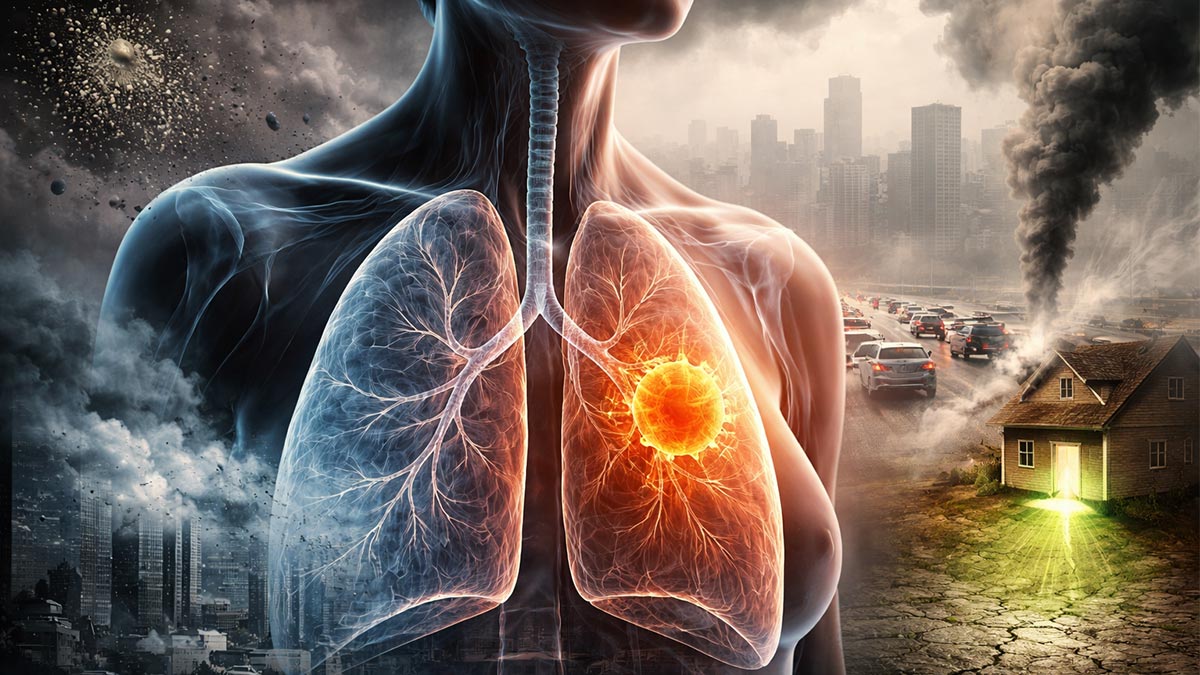
For decades, lung cancer has been strongly associated with smoking. However, a significant shift is now underway. A growing number of people diagnosed with lung cancer have never smoked in their lives. This emerging trend is forcing researchers, doctors, and policymakers to rethink long-held beliefs about the disease and its causes.
As of 2026, global health data suggests that approximately 15–25% of lung cancer cases worldwide occur in non-smokers, with even higher proportions reported among women and in certain regions of Asia. This rise highlights a complex interaction of environmental, genetic, and lifestyle-related factors that extend far beyond tobacco use.
The Growing Burden of Lung Cancer in Non-Smokers
Recent epidemiological studies indicate a steady increase in lung cancer cases among non-smokers. In some countries, lung cancer in non-smokers ranks among the top causes of cancer-related deaths on its own. This is particularly concerning because individuals without a smoking history are less likely to be screened early or suspect the disease.
Unlike traditional lung cancer cases linked to smoking, non-smoker lung cancer often presents differently. It is more commonly diagnosed at later stages, partly due to lower clinical suspicion and lack of routine screening protocols for this group.
Key Causes and Risk Factors
Air Pollution and Environmental Exposure
One of the leading contributors to lung cancer in non-smokers is prolonged exposure to polluted air. Fine particulate matter (PM2.5), commonly found in urban and industrial environments, can penetrate deep into the lungs and trigger cellular damage over time. According to global health estimates, air pollution accounts for a substantial portion of non-smoker lung cancer cases, especially in densely populated regions.
Indoor air pollution is another critical factor. Exposure to cooking fumes, particularly from biomass fuels used in poorly ventilated spaces, significantly increases risk. Radon gas, a naturally occurring radioactive substance that can accumulate in homes, is also recognized as a major cause.
Genetic Susceptibility
Advancements in genomic research have revealed that certain individuals carry genetic mutations that predispose them to lung cancer. Mutations in genes such as EGFR are more frequently observed in non-smokers. These genetic factors not only increase susceptibility but also influence how the disease develops and responds to treatment.
- → Nationwide Listeria Recall in France: What You Need to Know About Contaminated Pâtés and Cold Meats in 2026
- → The Unexpected Household Hack That Keeps Wet Floors and Entryways Clean in 2026
- → The Hair Transformation Women Over 50 Are Talking About in 2026: What Really Works for Thinning Hair
- → Marseille’s Mistral District in Crisis: Arrests, Secrets, and a Growing Mystery in 2026
- → Massive 35-Meter Waves in the Pacific: What Scientists Are Discovering in 2026
- → Why You’re Receiving More Spam Calls in 2026: The Hidden Reasons and How to Stop Them
- → The Express Chignon: A Quick and Elegant Hairstyle for Busy Women in 2026
Occupational Hazards
Exposure to carcinogens like asbestos, diesel exhaust, and industrial chemicals in workplaces can elevate lung cancer risk. Workers in construction, mining, and manufacturing industries are particularly vulnerable.
Pre-existing Lung Conditions
Chronic respiratory diseases, including pulmonary fibrosis and chronic obstructive pulmonary disease (COPD), may increase the likelihood of developing lung cancer, even in individuals who have never smoked.
Changing Patterns in Diagnosis
The traditional approach to lung cancer diagnosis is evolving. Physicians are now more aware that the disease can occur in non-smokers, prompting broader diagnostic considerations. However, challenges remain.
Screening programs have historically targeted heavy smokers using low-dose CT scans. Expanding these programs to include high-risk non-smokers is still under discussion, as identifying who qualifies as “high risk” without a smoking history is complex.
Early symptoms such as persistent cough, chest pain, fatigue, or unexplained weight loss are often overlooked in non-smokers, leading to delayed diagnoses.
Advances in Treatment and Precision Medicine
One of the most promising developments in lung cancer care is the rise of precision medicine. Unlike traditional treatments, which apply a generalized approach, precision medicine focuses on the genetic and molecular profile of an individual’s tumor.
Non-smoker lung cancers are more likely to carry specific mutations that can be targeted with advanced therapies. Targeted drugs and immunotherapies have significantly improved survival rates in certain patient groups.
By 2026, treatments such as tyrosine kinase inhibitors (TKIs) and immune checkpoint inhibitors have become standard options for many patients, offering more personalized and effective care compared to conventional chemotherapy alone.
Emotional and Social Impact
The psychological burden of lung cancer in non-smokers is often underestimated. Many patients face stigma due to the long-standing perception that lung cancer is self-inflicted through smoking. This misconception can lead to feelings of isolation, guilt, and frustration.
Non-smokers may also struggle to find relatable support networks, as their experiences differ from those traditionally associated with the disease. Addressing these emotional and social challenges is essential for holistic care.
Healthcare providers and advocacy groups are increasingly working to shift public perception and create more inclusive support systems for all lung cancer patients.
Prevention and Early Detection Strategies
Reducing Environmental Risks
Improving air quality through stricter environmental regulations and promoting clean energy solutions is critical. Individuals can also take steps such as using air purifiers, ensuring proper home ventilation, and testing for radon exposure.
Awareness and Education
Public awareness campaigns are essential in helping people recognize that lung cancer is not limited to smokers. Understanding early warning signs can lead to earlier diagnosis and better outcomes.
Expanding Screening Programs
Research is ongoing to develop risk assessment tools that include environmental and genetic factors, allowing for more inclusive screening strategies.
Debunking Common Myths
One of the biggest barriers to progress is the persistence of myths surrounding lung cancer. The belief that only smokers develop the disease delays diagnosis and discourages non-smokers from seeking timely medical attention.
Educating the public about the diverse causes of lung cancer can reduce stigma and encourage more proactive healthcare behavior.
Global Perspective
The rise of lung cancer in non-smokers is a worldwide concern. Rapid urbanization, industrial growth, and increasing pollution levels have contributed to higher exposure to carcinogens across many countries.
International collaboration is crucial in addressing this issue. Governments, health organizations, and researchers must work together to share data, implement policies, and develop innovative solutions.
The Role of Patient Advocacy
Patient advocacy groups play a vital role in reshaping the conversation around lung cancer. By sharing real-life experiences and pushing for better research funding, these groups help bring attention to non-smoker cases.
Their efforts have already contributed to increased awareness, improved access to treatments, and a gradual shift in public perception.
The Future of Lung Cancer Care
The future of lung cancer treatment lies in a more personalized and comprehensive approach. By combining genetic insights, environmental data, and advanced technologies, healthcare providers can better understand and treat each case individually.
Equally important is the need to address emotional well-being, ensuring that patients receive not just medical care but also psychological and social support.
Conclusion
The increasing incidence of lung cancer among non-smokers represents a significant shift in global health. It challenges outdated assumptions and highlights the need for a broader understanding of the disease. Environmental exposures, genetic factors, and lifestyle influences all play a role in this evolving landscape. Addressing this issue requires a coordinated effort focused on prevention, early detection, advanced treatment, and public education. By recognizing that lung cancer is not solely a smoker’s disease, society can move toward more inclusive care and ultimately save lives.
FAQs
What causes lung cancer in people who have never smoked?
Lung cancer in non-smokers is primarily linked to environmental exposures such as air pollution and radon, genetic mutations, occupational hazards, and certain underlying lung conditions.
Can non-smokers reduce their risk of lung cancer?
Yes, minimizing exposure to polluted environments, maintaining good indoor air quality, adopting a healthy lifestyle, and staying alert to respiratory symptoms can help reduce risk.
Why is lung cancer often detected late in non-smokers?
Because non-smokers are not typically considered high-risk, symptoms may be overlooked or misdiagnosed, leading to delayed detection.
Are treatments different for non-smoker lung cancer patients?
Yes, many non-smoker cases respond well to targeted therapies and precision medicine approaches that focus on specific genetic mutations.
Is air pollution really a major cause?
Yes, long-term exposure to polluted air is now recognized as one of the leading risk factors for lung cancer in non-smokers globally.




Leave a comment