

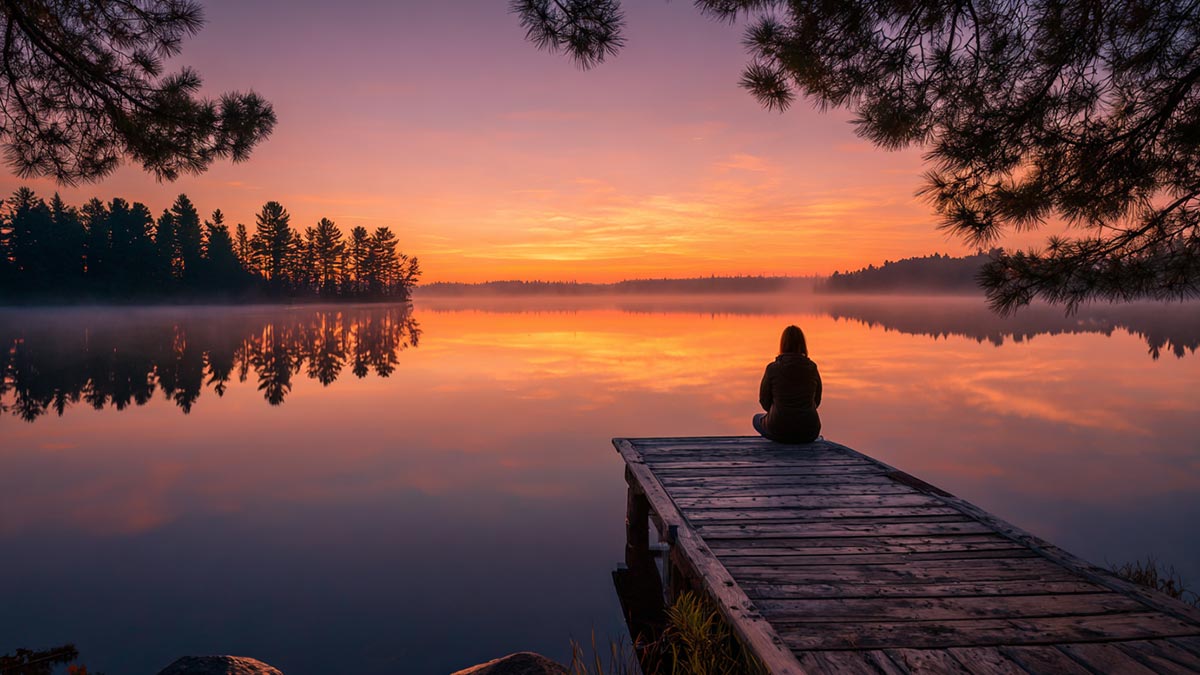
In a society that constantly celebrates networking, social media presence, and group engagement, there exists a distinct type of individual who thrives in a different way — by choosing solitude over socializing. These are the people who find energy in silence, meaning in self-reflection, and fulfillment in their own company. What’s often misunderstood, however, is that this preference for being alone isn’t a weakness. According to psychologists, it’s actually linked to a remarkable set of personality traits that deserve far more recognition.
1. The Creative Power of the Solitary Artist
Many assume that creativity flourishes in collaborative environments, but research suggests otherwise for solitary individuals. People who regularly spend time alone tend to develop a stronger imaginative capacity and a deeper connection to their creative instincts. Without the constant noise of social interaction, their minds are free to wander, experiment, and generate ideas organically.
Because they aren’t constantly exposed to outside opinions or trends, solitary individuals often develop a genuinely original voice in their creative work — whether that’s writing, painting, music, or any other art form. Their willingness to take creative risks, unconstrained by social approval, frequently results in bold and distinctive work that stands apart from the mainstream.
2. The Emotional Intelligence of the Solitary Empath
Being alone doesn’t mean being emotionally disconnected. In fact, people who spend significant time in solitude often develop a heightened sensitivity to the emotional states of those around them. This is because quiet self-reflection allows them to understand their own inner world more clearly, and that self-awareness naturally extends into a deeper empathy for others.
Psychologists note that solitary individuals frequently serve as trusted confidants within their social circles. Their ability to listen attentively, respond with genuine compassion, and offer grounded emotional guidance makes them invaluable to the people they care about — even if their social presence is selective.
3. The Resilience of the Solitary Survivor
People who are comfortable navigating challenges independently tend to build a quiet but formidable inner strength. Rather than seeking constant reassurance or external support, solitary individuals learn to rely on their own problem-solving abilities when adversity strikes. This self-sufficiency forges a kind of resilience that is both practical and deeply rooted.
Time spent alone also cultivates an inner sense of calm that becomes a stabilizing force during difficult periods. Solitary individuals often emerge from hardship with a clearer sense of direction and a strengthened sense of self, having confronted and worked through challenges largely from within.
4. The Mindfulness of the Solitary Seeker
In an era defined by digital noise and constant stimulation, the ability to stay present is increasingly rare — and increasingly valuable. People who embrace solitude tend to naturally develop a mindful approach to daily life. By regularly turning their attention inward, they build a strong awareness of their own thoughts, feelings, and reactions.
This ongoing practice of self-observation doesn’t just improve personal clarity; it also supports emotional regulation and a steadier sense of well-being. The solitary seeker tends to approach life’s inevitable ups and downs from a more grounded place, capable of responding thoughtfully rather than reacting impulsively.
- → Nationwide Listeria Recall in France: What You Need to Know About Contaminated Pâtés and Cold Meats in 2026
- → The Unexpected Household Hack That Keeps Wet Floors and Entryways Clean in 2026
- → The Hair Transformation Women Over 50 Are Talking About in 2026: What Really Works for Thinning Hair
- → Marseille’s Mistral District in Crisis: Arrests, Secrets, and a Growing Mystery in 2026
- → Massive 35-Meter Waves in the Pacific: What Scientists Are Discovering in 2026
- → Why You’re Receiving More Spam Calls in 2026: The Hidden Reasons and How to Stop Them
- → The Express Chignon: A Quick and Elegant Hairstyle for Busy Women in 2026
5. The Balance Between Solitude and Social Connection
A common misconception is that people who love solitude must dislike other people. In reality, many of these individuals have a sophisticated and intentional approach to social life. Rather than engaging indiscriminately, they are highly selective about their connections — prioritizing depth over breadth and quality over quantity.
| Social Style | Defining Characteristic |
|---|---|
| Selective Socializer | Prefers a small circle of deeply meaningful relationships |
| Intentional Networker | Builds connections with purpose and genuine mutual interest |
| Balanced Blender | Moves fluidly between social engagement and personal solitude |
These individuals understand the value of human connection — they simply choose to invest in it more deliberately. The result is often a set of relationships that are unusually strong, honest, and mutually enriching.
6. The Deep Thinking of the Solitary Intellectual
Solitary individuals are rarely passive in their quietness. In fact, their minds are often extraordinarily active. Free from the pressures of constant social performance, they are able to think slowly, critically, and deeply — exploring ideas from multiple angles and arriving at conclusions that more hurried thinkers might miss.
As clinical psychologist Dr. Emma Sinclair has noted, the solitary thinker is not constrained by conventional thinking. They have the space to question assumptions, explore unconventional ideas, and develop innovative solutions that group-oriented thinking might never surface. This intellectual depth often translates into exceptional analytical ability and a nuanced understanding of complex issues.
7. The Focused Concentration of the Solitary Achiever
In a world full of distractions, the capacity for deep, sustained focus is a genuine competitive advantage. People who embrace solitude often develop an exceptional ability to concentrate — immersing themselves fully in tasks without the fragmentation that comes from constant social demands.
This focused energy, applied consistently over time, tends to produce work of unusually high quality. Whether in academic pursuits, professional endeavors, or personal projects, the solitary achiever’s ability to stay deeply engaged gives them an edge that more externally stimulated individuals may struggle to replicate.
8. Self-Awareness as a Core Strength
Perhaps the most foundational trait of solitary individuals is a well-developed sense of self. Regular time alone creates the conditions for genuine introspection — an honest reckoning with one’s own values, motivations, strengths, and limitations. This self-knowledge is not just personally empowering; it shapes every other strength on this list.
People who know themselves well tend to make more deliberate choices, maintain stronger personal boundaries, and approach relationships with greater authenticity. Self-awareness, cultivated through solitude, is ultimately the quiet engine behind many of the other remarkable qualities that define the solitary soul.
Conclusion
The narrative that equates solitude with loneliness or social failure deserves to be retired. As psychologists have increasingly demonstrated, choosing time alone is far from a deficit — it is often the foundation of creativity, emotional depth, resilience, mindfulness, and intellectual strength. Solitary individuals are not withdrawing from the world; in many ways, they are engaging with it more thoughtfully than anyone else.
As social psychologist Dr. Olivia Raines puts it, solitude is not a sign of weakness or social ineptitude, but a reflection of self-awareness, emotional intelligence, and a genuine capacity for deep contemplation. The next time you encounter someone who prefers a quiet evening alone over a crowded social event, consider that they may be doing some of their most powerful personal work in that stillness.
Frequently Asked Questions
What personality traits are most commonly linked to a preference for solitude? Psychologists associate solitude-seeking with eight key traits: creative originality, emotional intelligence, personal resilience, mindfulness, a balanced approach to socializing, deep analytical thinking, sustained focus, and strong self-awareness. Together, these qualities paint a picture of individuals who are thoughtful, capable, and emotionally grounded.
Does spending time alone improve emotional intelligence? Yes. Solitude creates the conditions for deeper self-reflection, which builds emotional self-awareness. Understanding your own emotional landscape more clearly makes it easier to empathize with others, communicate more effectively, and offer genuine support to those around you.
Can solitary people still have strong social lives? Absolutely. Many people who value solitude are highly intentional — rather than avoiding social connection, they invest in fewer, deeper relationships. This selective approach often results in stronger and more meaningful bonds than those formed through broad, shallow socializing.
How does solitude fuel creativity? When the mind is not occupied with social performance or external input, it has more room to generate original ideas. Solitary individuals tend to develop authentic creative voices because they are less influenced by trends or the need for social approval, giving them the freedom to take genuine artistic risks.
Is solitude good for mental health and resilience? Research suggests it can be. Regular time alone helps build self-reliance, emotional regulation, and inner calm — all of which contribute to greater resilience when facing adversity. It also supports mindfulness, which is consistently linked to improved psychological well-being.
What is the difference between solitude and loneliness? Solitude is a chosen state that feels restorative and enriching. Loneliness is an unwanted sense of disconnection. People who thrive in solitude are not lonely — they are intentionally recharging, reflecting, and growing in their own company.


Leave a comment