

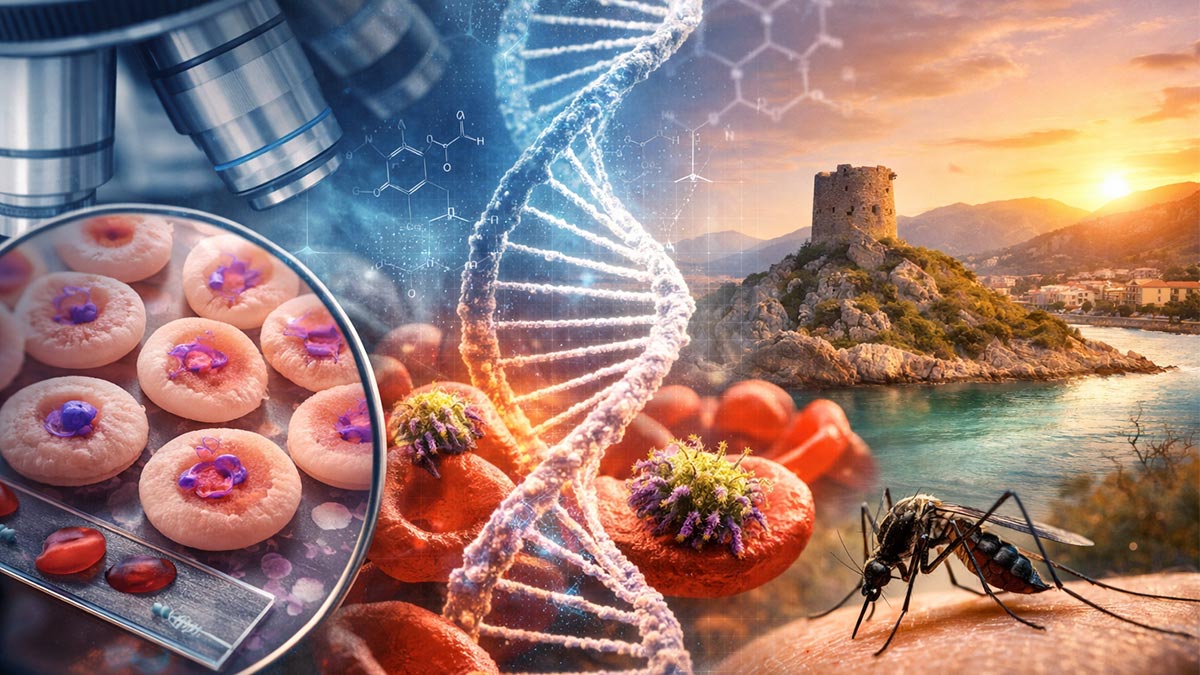
A remarkable scientific discovery from the Mediterranean island of Sardinia is drawing global attention for its potential to transform how malaria is prevented and treated. Researchers have identified a rare genetic variation that appears to offer natural protection against one of the world’s deadliest infectious diseases.
As of 2026, malaria continues to claim over 400,000 lives annually, with the highest burden in sub-Saharan Africa. Against this backdrop, the Sardinian finding is being viewed as a major step forward, offering fresh insight into how the human body can naturally resist infection and how that knowledge can be used to develop new medical strategies.
Why Sardinia Holds Unique Genetic Clues
Sardinia has long been of interest to scientists due to its relatively isolated population and distinct genetic history. Over generations, the island’s inhabitants have adapted to environmental challenges, including widespread malaria in the past.
This unique evolutionary background has created a rich genetic landscape that researchers can study to understand disease resistance. The recent discovery of a rare gene variant in this population highlights how isolation and adaptation can leave behind valuable biological clues that may benefit global health.
The Role of the CCND3 Gene Variant
At the center of this breakthrough is a gene known as CCND3. Scientists found that a specific variation of this gene, seen primarily in Sardinians, appears to interfere with the life cycle of Plasmodium falciparum, the parasite responsible for the most severe form of malaria.
When this parasite infects individuals carrying the variant, its ability to grow and spread is significantly reduced. Instead of thriving in the bloodstream, the parasite struggles to complete its normal development process, weakening the infection before it can cause severe harm.
Disrupting the Parasite’s Life Cycle
Malaria has long survived by adapting quickly to treatments and environmental changes. However, the Sardinian gene variant offers a different approach to combating the disease. Rather than attacking the parasite directly, it changes the environment inside red blood cells, making it less favorable for the parasite to survive.
This strategy could represent a shift in how malaria is treated. By focusing on the host’s biology instead of the parasite itself, researchers may be able to develop therapies that are harder for the parasite to resist.
A Potential Breakthrough for Global Health
The implications of this discovery are significant. Malaria remains a major public health challenge, particularly in regions with limited healthcare resources. Drug resistance and insecticide-resistant mosquitoes continue to hinder progress in controlling the disease.
If scientists can replicate or mimic the protective effects of the CCND3 gene variant, it could lead to new treatments or preventive measures. Even incremental improvements could save hundreds of thousands of lives each year and reduce the economic burden associated with the disease.
- → Nationwide Listeria Recall in France: What You Need to Know About Contaminated Pâtés and Cold Meats in 2026
- → The Unexpected Household Hack That Keeps Wet Floors and Entryways Clean in 2026
- → The Hair Transformation Women Over 50 Are Talking About in 2026: What Really Works for Thinning Hair
- → Marseille’s Mistral District in Crisis: Arrests, Secrets, and a Growing Mystery in 2026
- → Massive 35-Meter Waves in the Pacific: What Scientists Are Discovering in 2026
- → Why You’re Receiving More Spam Calls in 2026: The Hidden Reasons and How to Stop Them
- → The Express Chignon: A Quick and Elegant Hairstyle for Busy Women in 2026
The Ongoing Battle Between Humans and Malaria
The relationship between humans and malaria is often described as an evolutionary arms race. Over thousands of years, the parasite has developed ways to bypass human defenses, while humans have evolved genetic traits to resist infection.
The Sardinian discovery is part of this ongoing story. It provides a rare example of how human genetic adaptation can offer an advantage against a persistent and evolving pathogen. Understanding this interaction could lead to innovative ways of staying ahead in this long-standing battle.
Advancing Personalized Medicine
Beyond malaria, this discovery also highlights the growing importance of personalized medicine. By studying genetic differences among populations, researchers can develop treatments tailored to specific biological traits.
The Sardinian gene variant demonstrates how individual genetic profiles can influence disease resistance. This knowledge can be applied to other conditions, opening the door to more precise and effective healthcare solutions in the future.
Challenges and Next Steps
While the discovery is promising, translating it into real-world treatments will require extensive research. Scientists must fully understand how the gene variant works and determine how to replicate its effects safely in broader populations.
Collaboration between global health organizations, researchers, and governments will be essential to turn this finding into practical solutions. Continued investment in genetic research and clinical trials will play a key role in advancing this work.
A Turning Point in the Fight Against Malaria
The Sardinian gene variant offers a new perspective on how malaria can be tackled. Instead of relying solely on traditional methods, such as drugs and mosquito control, this discovery introduces the possibility of using the body’s own biology as a defense mechanism.
It represents a shift toward more innovative and sustainable approaches that could complement existing strategies and improve long-term outcomes.
Conclusion
The identification of a malaria-resistant gene variant in Sardinia marks an important milestone in global health research. By revealing how genetic adaptations can interfere with the parasite’s life cycle, this discovery opens the door to new treatment possibilities and preventive strategies.
Although challenges remain, the potential impact is enormous. With continued research and collaboration, this breakthrough could help reshape the fight against malaria and bring the world closer to reducing, or even eliminating, one of its most persistent diseases.
FAQs
What is the Sardinian gene variant
It is a rare variation in the CCND3 gene that appears to provide protection against the malaria parasite
How does it help prevent malaria
The variant disrupts the parasite’s ability to grow and reproduce inside red blood cells
Why is this discovery important
It could lead to new treatments or preventive strategies that save lives worldwide
Can this lead to a cure for malaria
It is too early to say, but it offers a promising direction for future research
Why is Sardinia important for this research
Its isolated population and unique genetic history make it ideal for studying disease resistance




Leave a comment