

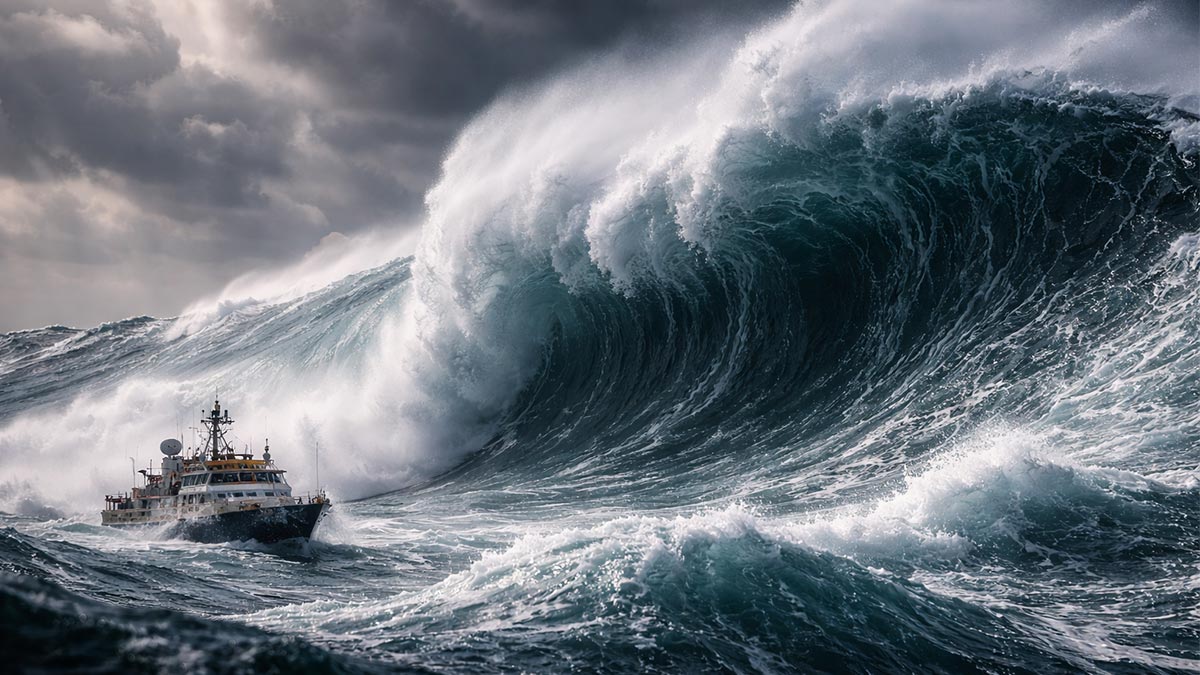
Recent observations in the Pacific Ocean have drawn global attention after researchers identified extremely large waves—some reaching heights of up to 35 meters. These towering formations, comparable to a multi-story building, are raising serious questions about ocean behavior, climate patterns, and the potential risks to human activity at sea.
While extreme waves are not entirely new, the scale and frequency being discussed in 2026 have intensified scientific debate. Experts are now working to determine whether these waves are part of natural ocean variability or a sign of deeper environmental changes.
Understanding These Giant Waves
What Makes These Waves Unusual
Ocean waves of significant height do occur naturally, especially during storms. However, waves approaching 35 meters are rare and considered extreme events.
Recent satellite data suggests:
- Waves are becoming larger in certain regions of the Pacific
- Some events appear more frequent than historical averages
- Patterns may be shifting in ways that are not fully understood
These findings have prompted further investigation into how ocean systems are evolving.
Natural Phenomenon or Climate Warning?
One of the biggest questions scientists are trying to answer is whether these waves are part of normal ocean dynamics or influenced by climate change.
The Natural Variability Argument
Some researchers believe that the ocean’s complex systems naturally produce occasional extreme waves. Historical records show that unusually large waves have occurred before, even without modern climate pressures.
The Climate Change Perspective
Others argue that rising global temperatures and changing wind patterns may be amplifying wave intensity. Warmer oceans can alter storm behavior, potentially contributing to larger and more powerful waves.
The truth may lie somewhere in between, but ongoing research is critical to understanding the full picture.
How Scientists Measure Ocean Waves
Tracking massive waves across the open ocean is not simple. Scientists rely on two main methods:
Satellite Monitoring
Satellites provide a broad, global view of ocean conditions. They can detect wave patterns across vast areas, making them essential for identifying large-scale changes.
Ocean Buoys
Buoys offer more precise, localized measurements. However, they are limited in coverage and can be damaged during extreme conditions.
By combining these tools, researchers are building a clearer understanding of wave behavior.
Why These Waves Matter
The discovery of such large waves is not just a scientific curiosity—it has real-world implications.
Impact on Maritime Shipping
- Increased خطر of vessel damage
- Disruptions to global trade routes
- Greater خطر for crew safety
Risks to Coastal Communities
- Higher احتمال of flooding and erosion
- Damage to infrastructure and homes
- Increased pressure on disaster response systems
Consequences for the Insurance Industry
- Rising claims related to ocean damage
- Higher premiums for coastal and maritime coverage
- Potential withdrawal of coverage in high-risk areas
These impacts highlight the importance of understanding and preparing for extreme ocean events.
The Ongoing Scientific Debate
The disagreement among experts is not unusual in emerging scientific issues. However, the stakes in this case are particularly high.
If these waves are primarily natural, current risk management strategies may still be effective. But if they are linked to climate change, it could signal a need for major adjustments in how societies prepare for ocean-related risks.
Possible Future Scenarios
Researchers have outlined several potential paths for how this situation could develop:
Scenario 1: Continued Natural Variability
Extreme waves remain rare and manageable, with no significant long-term trend.
Scenario 2: Gradual Increase in Wave Activity
Waves become more frequent and slightly larger, increasing risks over time.
Scenario 3: Severe Climate-Driven Events
Large waves become more common and intense, leading to major disruptions in global systems.
While the most extreme scenario is not yet certain, it cannot be ruled out.
Expert Insights on the Situation
Scientists and industry experts are emphasizing the need for caution and continued research.
Many agree that:
- Ocean systems are changing, even if the exact causes are still debated
- The risks associated with extreme waves are increasing
- Early awareness and preparation are essential
This is not just an environmental issue—it is also an economic and safety concern.
What Can Be Done Moving Forward
Addressing the risks associated with these waves requires a coordinated approach.
- → Nationwide Listeria Recall in France: What You Need to Know About Contaminated Pâtés and Cold Meats in 2026
- → The Unexpected Household Hack That Keeps Wet Floors and Entryways Clean in 2026
- → The Hair Transformation Women Over 50 Are Talking About in 2026: What Really Works for Thinning Hair
- → Marseille’s Mistral District in Crisis: Arrests, Secrets, and a Growing Mystery in 2026
- → Why You’re Receiving More Spam Calls in 2026: The Hidden Reasons and How to Stop Them
- → The Express Chignon: A Quick and Elegant Hairstyle for Busy Women in 2026
- → Pisces Horoscope Warning for April 02, 2026: A Turning Point for Health, Love, and Finances
Key Actions
- Invest in better monitoring and data collection
- Improve early warning systems for maritime and coastal areas
- Strengthen infrastructure in vulnerable regions
- Continue global efforts to address climate change
Preparedness will play a crucial role in minimizing potential damage.
Conclusion
The emergence of massive 35-meter waves in the Pacific Ocean is a development that cannot be ignored. Whether driven by natural ocean dynamics or influenced by climate change, these waves highlight the increasing complexity of Earth’s environmental systems.
What makes this situation particularly important is its wide-ranging impact—from global shipping routes to coastal safety and financial systems. As research continues, one thing is clear: understanding these changes is essential for planning the future.
Rather than viewing this as a distant scientific issue, it should be seen as a signal to improve awareness, strengthen resilience, and prepare for a changing world.
Frequently Asked Questions
How tall are these waves in the Pacific?
Some waves have been reported to reach heights of up to 35 meters.
Are these waves caused by climate change?
There is no definitive answer yet. Scientists are still debating whether they are due to natural variability or climate-related changes.
How are these waves measured?
They are tracked using satellite data and ocean buoys.
Why are these waves dangerous?
They can damage ships, threaten coastal areas, and increase financial risks for industries like insurance.
Will these waves become more common?
It is possible, but further research is needed to confirm long-term trends.




Leave a comment