

The Blinding Question No One Wants to Answer
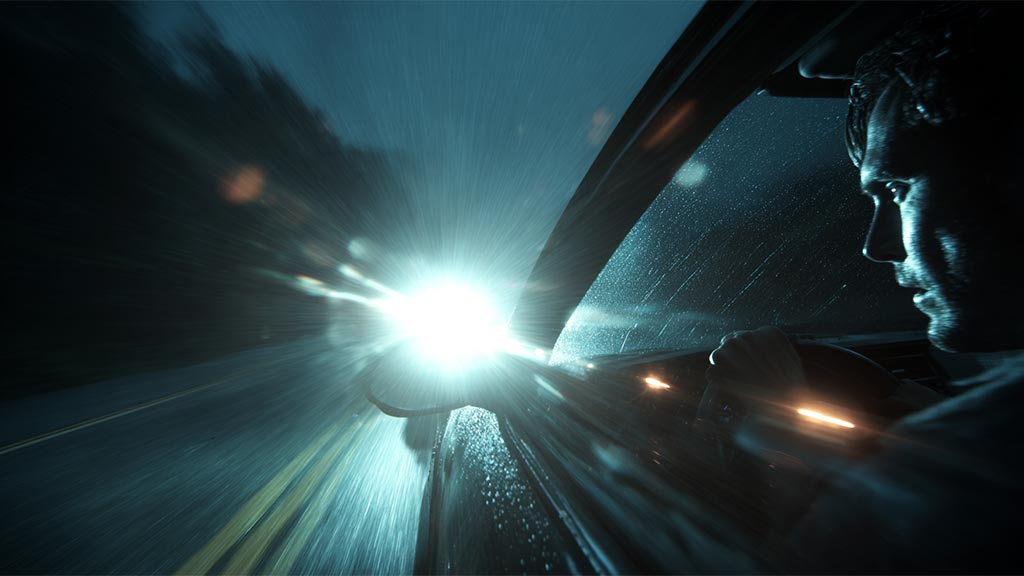
A piercing white beam fills your windshield. For two or three critical seconds, your vision is effectively gone. In that narrow window, you either hold your nerve — or you react with a panic that could cost you dearly.
As LED headlights grow progressively brighter, sharper, and more sophisticated, this scenario has become a flashpoint in everyday conversation — on social media, in online forums, and around dinner tables. Are these cutting-edge lights a genuine advancement for road safety, or a hazard hiding behind a veneer of clean technology? A newly published study has added fuel to a debate that was already burning, and it forces a deeply uncomfortable question into the open.
What the Research Actually Found
This study didn’t emerge from a group of automotive enthusiasts — it was conducted by professional traffic researchers. Test drivers were monitored during real nighttime driving sessions and in controlled driving simulators, facing oncoming vehicles equipped with halogen, xenon, and LED headlights. Researchers measured everything: pupil response, eye movement patterns, steering errors, and lateral drift toward road edges.
The sober conclusion? In certain conditions, LED lighting helps drivers detect pedestrians and obstacles more effectively. At the same time, the subjective experience of being “blinded” increases significantly.
What makes this study particularly notable is how it distinguishes between measurable safety and perceived safety. Objectively, drivers using modern LED matrix systems spotted hazards somewhat earlier. Subjectively, drivers in the oncoming lane frequently reported feeling visually assaulted. Researchers documented “visual overload” and “heightened stress responses” — something any driver who has arrived home after a long motorway night run with throbbing eyes will immediately recognise.
It’s Not Just About the Technology
One finding that caught many observers off guard: a significant portion of glare problems doesn’t stem from LED technology itself, but rather from how the lights are aimed, the height at which they’re mounted, and the individual sensitivity of the human eye behind the wheel.
An SUV with headlights positioned high strikes a compact car driver squarely in the eyes. Add a hard, cool-white LED beam, and for drivers with sensitive vision, the effect can resemble staring into a welder’s arc. The researchers established a critical threshold: beyond a certain glare intensity, reaction times begin to lengthen — precisely the opposite of what nighttime driving demands.
A Real-World Example from the Study
Consider one of the documented cases: a 43-year-old test driver with two decades of extensive road experience. On a winding rural road at night, he encountered a mid-range SUV fitted with modern LED matrix headlights. The system was functioning exactly as designed — automatically masking the beam to avoid direct eye contact with oncoming drivers. On paper, flawless. In practice, he momentarily lost his line, drifted slightly right, and caught the gravel shoulder with one tyre. No collision — but a textbook near-miss.
In the lab afterward, it emerged that he was among those with heightened glare sensitivity, with pupils that adapt more slowly than average. This trait is far more common than people realise — particularly among drivers over 40 and those who wear contact lenses. The study catalogued multiple incidents of this nature: not dramatic crashes, but those small, quiet errors that go unnoticed most nights — until, one evening, a deer steps into the road, or an unlit cyclist appears, or a construction barrier looms.
The Accident Statistics Tell a Mixed Story
Analysis of collision data adds another layer of complexity. Vehicles equipped with modern LED or matrix headlights are statistically less likely to be involved in single-vehicle nighttime crashes. In other words, drivers who have this technology tend to see better and crash less. Yet simultaneously, complaints from oncoming drivers about being blinded continue to rise.
The critical gap in the data: there is almost no systematic documentation of near-misses caused by glare. The researchers describe this as a “grey zone of risk” — incidents that happen regularly but are rarely recorded anywhere.
The Engineering Case for LED Lighting
From a purely technical standpoint, LED lighting represents a significant leap forward: energy-efficient, long-lasting, highly controllable, and capable of precise beam shaping. Matrix systems can selectively dim sections of the light cone upon detecting another vehicle, effectively bringing nighttime visibility closer to daylight conditions. Traffic researchers are clear that, when deployed correctly, these systems genuinely have the potential to save lives.
Yet this very precision is what makes the contrast so stark. Drivers who switch from halogen to LED headlights experience something close to revelation — roads feel wider, signs appear earlier, lane markings seem freshly painted. But a driver in an older vehicle on the opposite side of that interaction receives the full glare without any of the safety benefit.
The “Lighting Class Divide” on Modern Roads
The researchers frame this phenomenon bluntly: we are witnessing a kind of “lighting class divide” on public roads. On one side are drivers whose premium headlights sharply extend their visual range. On the other are drivers whose eyes absorb more stress every night, through no fault of their own. Sitting uneasily between them is the question of whether current regulations governing maximum luminance and headlight alignment still reflect reality — a reality defined by ever-taller SUVs and ever-brighter LEDs.
- → Nationwide Listeria Recall in France: What You Need to Know About Contaminated Pâtés and Cold Meats in 2026
- → The Unexpected Household Hack That Keeps Wet Floors and Entryways Clean in 2026
- → The Hair Transformation Women Over 50 Are Talking About in 2026: What Really Works for Thinning Hair
- → Marseille’s Mistral District in Crisis: Arrests, Secrets, and a Growing Mystery in 2026
- → Massive 35-Meter Waves in the Pacific: What Scientists Are Discovering in 2026
- → Why You’re Receiving More Spam Calls in 2026: The Hidden Reasons and How to Stop Them
- → The Express Chignon: A Quick and Elegant Hairstyle for Busy Women in 2026
What You Can Actually Do About It
Keep Your Headlights Properly Aimed
The first step sounds unglamorous, but it matters: keep your headlights clean and have their alignment professionally checked. Many workshops offer a quick light inspection, often at no charge. The study shows that even a few millimetres of misalignment can significantly amplify glare for oncoming drivers. Fully loaded boots are a common culprit — they tilt the nose up and send beams directly into other drivers’ eyes.
Take Your Eyes Seriously
Drivers who cover high nighttime mileage face compounding risks when tired, dehydrated, or wearing old scratched lenses. Artificial lighting, screen exposure, wet road reflections, and LED glare form a genuinely hostile combination. Optometrists particularly recommend that regular nighttime drivers consider anti-reflective coatings or lightly tinted night-driving glasses. The effect may sound modest — but research confirms it is measurable.
Adjust Your Driving Behaviour
Many drivers underestimate how quickly stress accumulates when the eyes are repeatedly hit by intense light. A practical technique: when an exceptionally bright vehicle approaches, shift your focal point slightly right toward the road edge rather than staring into the oncoming beam. Don’t look away entirely — just redirect the central gaze. Experienced drivers do this instinctively.
Speed is another variable. The study found that most drivers maintain their pace even while being actively blinded. Reducing speed by even 20 km/h on a dark rural road when a bright vehicle approaches is rational — even if almost nobody actually does it.
Common Mistakes That Make Things Worse
The “My Lights Are Fine” Assumption
Countless drivers assume their headlights are correctly set because they appear to work. The reality is that an over-aimed LED beam can flood an entire stretch of road with unwanted light, and the driver causing the problem is the last to know.
Cheap Retrofit LED Kits
Perhaps the most harmful practice is fitting unregulated aftermarket LED bulbs into reflector housings designed for halogen light. The result is uncontrolled scatter, harsh cut-off lines, and severe glare. These modifications are typically illegal, optically inferior, and actively dangerous for other road users.
Skipping Rest Stops
After two or three hours of nighttime driving, many motorists push on simply because the destination feels close. The study found that test drivers in this fatigued state reported glare as significantly more aggressive and disorienting. Tired eyes have less tolerance for sudden brightness changes — and fewer resources to recover quickly. Yet almost no one voluntarily pulls over every hour. The pragmatic truth: we press on and hope nothing extraordinary crosses our path.
A Psychologist’s Verdict
A traffic psychologist who contributed to the study offered this summary:
“LED lighting saves lives when it is used correctly. It stresses people when they perceive it as a weapon. Right now, our daily driving experience sits somewhere between those two extremes.”
Conclusion
The key takeaway from this research is not that LED headlights are inherently dangerous — it is that our relationship with this technology remains unresolved. LED lighting objectively improves visibility for those who have it. It simultaneously increases visual stress for many who don’t. Incorrect installation, poor alignment, aging eyes, fatigue, and legislative frameworks that haven’t kept pace with vehicle evolution all combine to widen that gap.
The path forward isn’t choosing sides in a debate framed as “LED saves lives” versus “LED causes blindness.” It requires drivers to check their own vehicle’s light alignment, respect their eyes’ limitations, adapt their behaviour on the road, and approach oncoming drivers not as abstractions in traffic statistics — but as real people with real eyes on the other side of that beam.
Technology alone doesn’t make roads safer. The people using it do.
Frequently Asked Questions
Do LED headlights cause more glare than halogen? Many drivers perceive LED light as more intense because it is whiter and higher in contrast. However, actual glare levels depend heavily on beam alignment, the height of the vehicle, and headlight design — not the LED technology alone.
Are LED matrix headlights safer for oncoming drivers? When functioning correctly and properly calibrated, yes — they can selectively mask portions of the beam to protect oncoming drivers. In practice, subjective glare can still be high under certain conditions, such as wet road surfaces that scatter reflected light.
What can I do if I’m frequently blinded at night? Shift your gaze toward the right road edge when a bright vehicle approaches, reduce your speed where practical, and take tiredness seriously. An eye examination to assess glare sensitivity, along with anti-reflective or night-driving lenses, is worth considering.
Are budget LED retrofit kits worth installing? Most of these products lack proper type approval and produce poor optical output when fitted into reflector housings not designed for LED light. The result is scattered, aggressive glare — and in many jurisdictions, legal liability.
How often should headlight alignment be checked? At minimum once a year, and ideally before the darker autumn and winter months or after any suspension work or significant changes to vehicle load. A brief workshop check ensures alignment remains within safe tolerances.




Leave a comment