

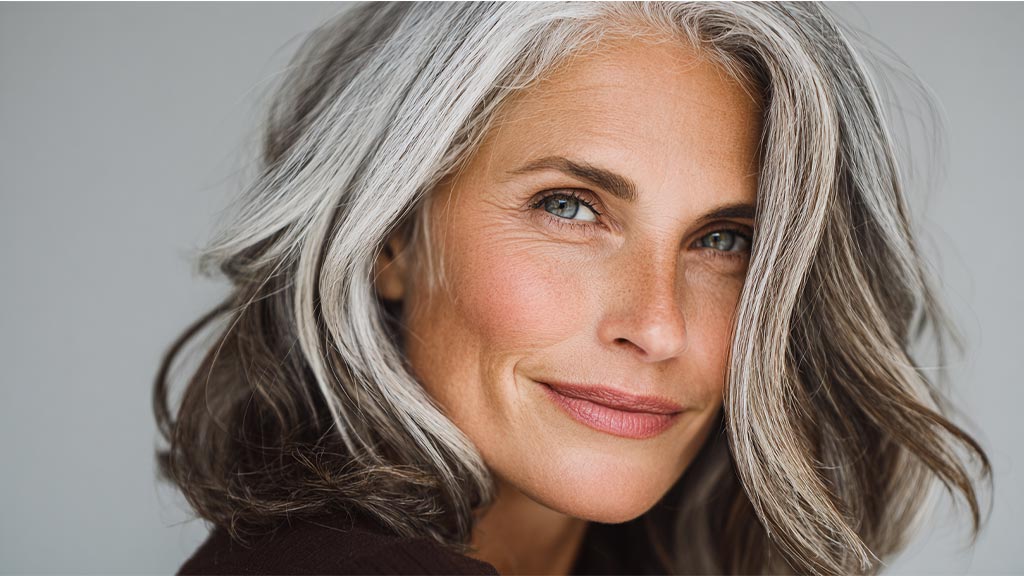
Growing grey after 50 no longer has to feel like something to fight against. With the right colouring technique, those emerging silver strands can become one of your most striking style features. Hairdressers are increasingly pointing to one approach above all others — the salt and pepper balayage — as the most intelligent, flattering way to work with naturally greying hair rather than against it.
Why Greying Hair After 50 Needs a Different Approach Entirely
Most people notice their first white hairs as isolated surprises. Then, gradually, they spread — reshaping the overall colour and tone of the entire head. For women over 50, this transition often lands in an unsatisfying middle ground: hair that looks neither intentionally coloured nor fully silver, just uneven and lacking vibrancy.
The two most common responses are well known. Some women reach immediately for full-coverage dye, which brings its own cycle of relentless root maintenance. Others stop colouring altogether and wait out the grow-out phase, which can feel equally frustrating. Both paths carry trade-offs — financial, chemical, or aesthetic — especially when natural pigment and grey are competing side by side on the same head.
The real issue isn’t the grey hair itself. It’s the sharp, unmanaged contrast between incoming white strands and the original base colour.
This is why professional colourists are increasingly shifting toward what they call “transition management” for clients in this age group. Rather than attempting to eliminate grey entirely, the focus moves to blending, softening, and enhancing what’s already growing. That’s precisely the philosophy behind the salt and pepper balayage.
What Is Salt and Pepper Balayage?
Despite sounding straightforward, salt and pepper balayage isn’t a fixed colour formula you can simply request by name and receive identically in every salon. It’s a personalised, freehand colouring approach that combines lighter “salt” highlights with deeper “pepper” lowlights, calibrated specifically to each person’s natural greying pattern.
- → Nationwide Listeria Recall in France: What You Need to Know About Contaminated Pâtés and Cold Meats in 2026
- → The Unexpected Household Hack That Keeps Wet Floors and Entryways Clean in 2026
- → The Hair Transformation Women Over 50 Are Talking About in 2026: What Really Works for Thinning Hair
- → Marseille’s Mistral District in Crisis: Arrests, Secrets, and a Growing Mystery in 2026
- → Massive 35-Meter Waves in the Pacific: What Scientists Are Discovering in 2026
- → Why You’re Receiving More Spam Calls in 2026: The Hidden Reasons and How to Stop Them
- → The Express Chignon: A Quick and Elegant Hairstyle for Busy Women in 2026
Standard single-process dyes coat every strand in a uniform shade — an outcome that can look flat, harsh, or noticeably artificial. Balayage takes an entirely different route. The colourist paints individual sections by hand, leaving portions of natural hair untouched, which produces a softer, more organic result.
The aim of salt and pepper balayage isn’t to wipe out grey — it’s to reduce the visual tension between grey and natural pigment.
By selectively lightening darker areas and adding depth to others, a skilled colourist can achieve several things at once: soften the boundary between grey roots and older colour, create a more cohesive and flattering overall tone, preserve the natural luminosity of silver hair, and meaningfully extend the gap between salon visits.
How the Technique Adapts to Different Greying Patterns
Because no two heads of hair grey in quite the same way, the actual approach to salt and pepper balayage shifts from client to client. A thorough colourist will first evaluate the proportion of grey present, its distribution across the head, and the underlying natural base colour before picking up a brush.
Mostly Grey or White Hair
When more than half the hair has already turned grey or white, the primary risk is a flat, washed-out appearance — particularly on lighter skin tones. In these cases, colourists typically lean more heavily on the “pepper” side of the equation.
Deeper lowlights in cool beige, ash brown, or soft charcoal tones are worked through the lengths and underlayers to introduce dimension. These strategically placed darker strands interrupt the uniformity of the grey, restore depth around the face, and create a subtle visual lift without returning to a fully dark colour.
The hair remains predominantly silver in overall appearance — but with texture, intentionality, and a refined shadow that makes the grey look considered rather than coincidental.
Grey That’s Just Beginning to Show
For those in their late 40s or early 50s where white hairs are still scattered, primarily appearing at the temples and parting, the approach reverses. More “salt” and less “pepper” is the order of the day.
Here, the colourist adds soft, lighter highlights around the face and through the upper layers, which draws the existing white hairs into a broader, more harmonious palette. Rather than standing out as isolated streaks, the grey blends naturally into what appears to be a deliberate highlight pattern.
This method also sidesteps the visible regrowth problem that plagues full-coverage dye. As grey continues to grow in, the contrast with the surrounding colour remains gentle rather than stark.
What to Ask Your Colourist
Arriving at a salon and simply using the phrase “salt and pepper balayage” won’t be enough on its own. Because the technique varies so significantly between individuals, a clear and detailed conversation with your stylist is essential.
| Your Situation | What to Request |
|---|---|
| Mostly grey or white hair | Cool, soft lowlights to restore depth and prevent a flat, pale appearance |
| Mostly dark hair with emerging grey | Lighter highlights to blend grey strands and ease harsh regrowth |
| Strong contrast between roots and ends | Ask to blur the demarcation line rather than simply matching old colour |
| Sensitive scalp or chemically damaged hair | A partial balayage with minimal lightener, focused on the top and face-framing sections |
Bringing a handful of reference photos — both of your current colour and your desired outcome — helps anchor the conversation in something concrete. Aim for realistic adjustments rather than a wholesale transformation.
Why Women Over 50 Are Choosing This Method
Salt and pepper balayage occupies a considered middle ground between two extremes: the commitment of full coverage and the patience required for going entirely natural. It acknowledges that hair is changing while using that change as a creative starting point.
The practical benefits are considerable. Appointments can be spaced out to every eight to twelve weeks since roots are far less obvious. Chemical exposure is reduced because only selected strands are treated. The tone can be adjusted over time to stay in harmony with evolving skin as it changes with age. And perhaps most valuably, the psychological dynamic shifts — you’re no longer in conflict with your own hair, just guiding it.
For a great many women, this technique reframes what might have felt like a “grey crisis” into a genuine style decision.
Caring for Salt and Pepper Balayage at Home
Once the colour is done, the right home routine keeps it looking its best for longer. Grey hair tends to be drier and more porous than pigmented hair, which makes it more vulnerable to dullness and unwanted yellow or brassy tones.
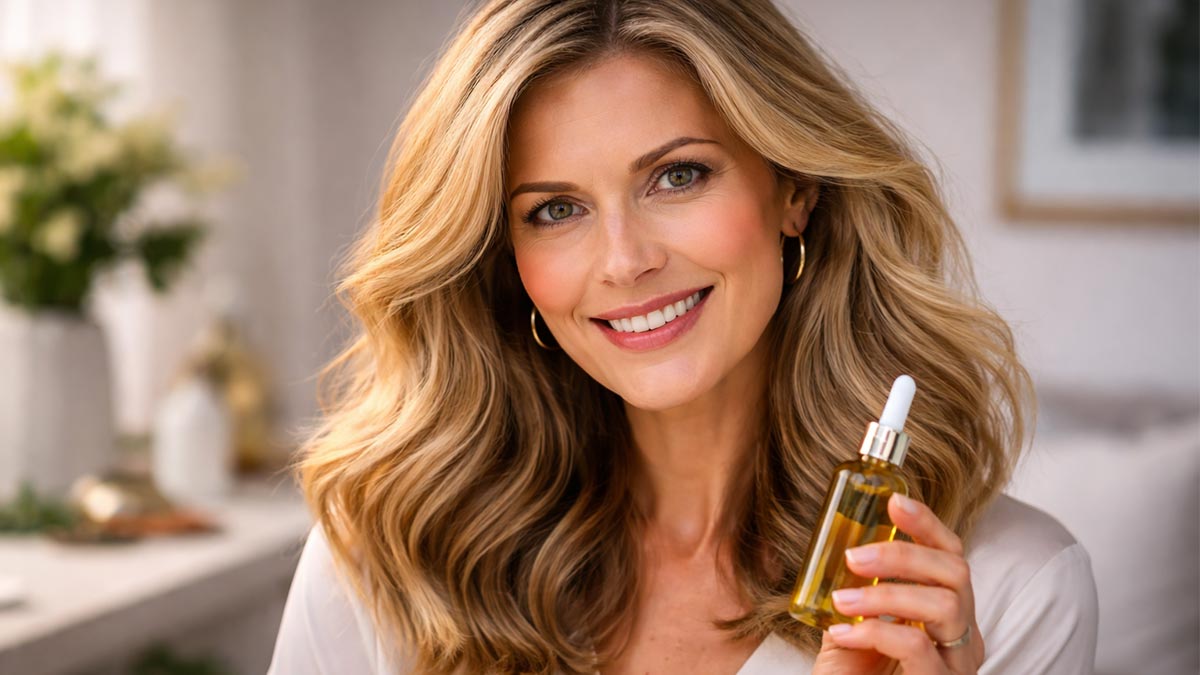
A few straightforward habits make a meaningful difference. Swap to a hydrating shampoo and conditioner formulated for coloured or grey hair. Incorporate a purple or blue toning shampoo once weekly to neutralise brassiness. Apply a nourishing mask or a few drops of hair oil through the mid-lengths and ends to manage frizz and dryness. In sunny months, cover up or use a UV-protective spray, as prolonged sun exposure can yellow grey hair noticeably.
With heat tools, lower temperature settings paired with a heat-protective spray preserve both shine and tone for considerably longer than high-heat styling.
Understanding the Terminology Before You Go
Salon language can feel impenetrable if it’s been a while since you last coloured your hair. A handful of terms are worth knowing before you sit in the chair.
Balayage refers to a freehand painting technique that produces soft, graduated highlights with no hard lines or obvious regrowth boundaries. Lowlights are darker strands added back into the hair to create depth and break up areas that have become too pale or flat. Babylights are extremely fine highlights designed to replicate the natural multi-dimensional colour seen in children’s hair. Root shadow describes a slightly deeper tone applied at the roots to ease the visual transition between natural growth and coloured lengths.
You don’t need to become a colour expert — but knowing these terms helps you communicate precisely how soft, blended, or dimensional you want the final result to be.
Picturing the Result: Two Real-World Scenarios
It can help to visualise the outcome before booking. Consider a woman of 55 with roughly 60% grey who has grown tired of the relentless upkeep of full-coverage dye. Salt and pepper balayage for her might mean keeping the silver as the dominant shade while introducing cool lowlights through the crown and around the face. She leaves the salon still recognisably grey — but sharper, more polished, and more three-dimensional.
Now consider someone who is 48, with a natural brunette base and grey concentrated mainly at the temples and parting. She values her dark base but dislikes the stark contrast of isolated white streaks. Her colourist might weave soft caramel or cool beige highlights through the top layers, drawing those grey strands into a broader, sun-kissed pattern. The overall result reads as luminous rather than patchy.
Both outcomes rest on the same core principle: stop resisting the natural shift and use colour deliberately to make it look intentional.
Conclusion
Grey hair after 50 is not a problem to solve — it’s a transition to manage well. The salt and pepper balayage gives women a practical, low-maintenance, and genuinely flattering route through that transition. By working with the natural greying process rather than overriding it, this technique produces hair that looks dimensional, modern, and effortlessly styled. Whether you’re just beginning to see silver strands or already largely grey, a personalised balayage approach could be the colour strategy that makes your hair feel like an asset again rather than a concern.
Frequently Asked Questions (FAQs)
Q: How is salt and pepper balayage different from regular highlights? Regular highlights typically follow a uniform pattern using foils, which can create obvious lines of regrowth. Salt and pepper balayage is painted freehand and customised specifically to blend with your natural grey, producing a far softer and more organic result.
Q: Will salt and pepper balayage work if I’m only starting to go grey? Yes. For early-stage greying, the technique focuses on adding lighter highlights to blend scattered white hairs into the overall colour, making them look like part of a deliberate highlight pattern rather than isolated strands.
Q: How long do appointments need to be, and how often? Because regrowth is less stark with balayage than with full-coverage dye, most women find they only need to visit the salon every eight to twelve weeks, compared to the four to six weeks typically required for root touch-ups.
Q: Is balayage suitable for damaged or fine hair? It can be, with adjustments. For sensitive scalps or chemically compromised hair, a partial balayage using minimal lightener — focused on the top layers and face-framing sections — is a gentler alternative that still delivers visible results.
Q: Can I maintain the colour at home between appointments? Absolutely. Using a hydrating shampoo, incorporating a purple toning shampoo once a week, and applying a nourishing mask regularly are the three most impactful steps for keeping salt and pepper balayage looking fresh between salon visits.
Q: Does grey hair require special products after colouring? Grey hair is naturally more porous and prone to dryness, so products designed for coloured or grey hair — particularly those with toning and moisturising properties — make a noticeable difference in maintaining shine and preventing brassiness.



Leave a comment