

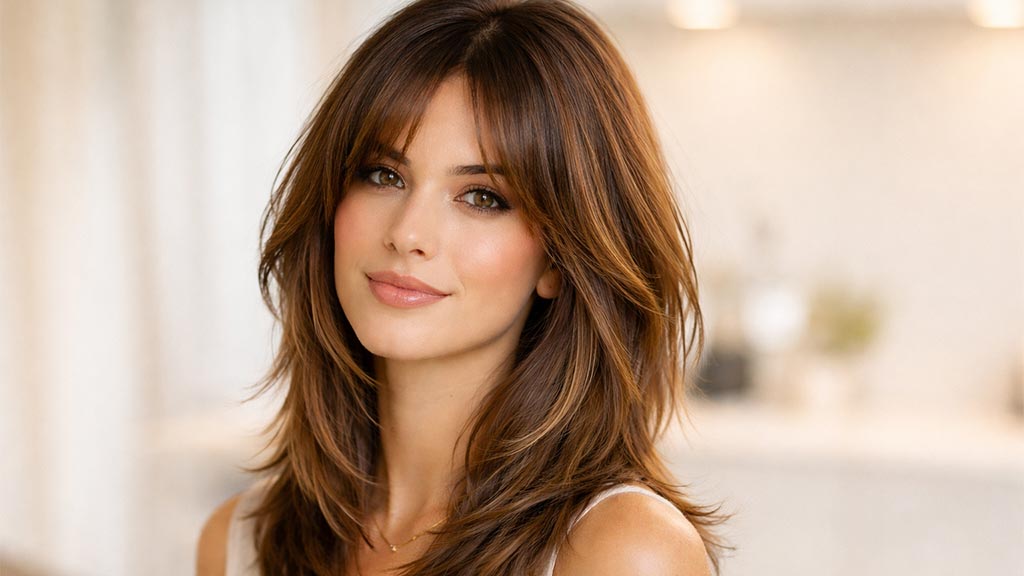
From runways to neighbourhood salons, one hairstyle is quietly dominating conversations in 2026 — the mid-length feather cut. Sitting somewhere between the shoulders and collarbone, this style promises effortless movement, soft volume, and a flattering face frame, all without requiring a dramatic chop.
What Exactly Is the Mid-Length Feather Cut?
For years, the shoulder-to-collarbone length was dismissed as an awkward in-between stage — something to endure while growing out a bob or waiting for longer locks. Stylists in 2026 are reframing that entirely.
The modern feather cut transforms this so-called “difficult” length into a deliberate, polished statement. At its core, the cut features ultra-soft, airy layers that are lightly razored or point-cut at the ends, creating a slightly frayed, feathered finish. Rather than one uniform curtain of hair, the result is a multi-dimensional shape with natural swing and a soft halo of volume.
- → Nationwide Listeria Recall in France: What You Need to Know About Contaminated Pâtés and Cold Meats in 2026
- → The Unexpected Household Hack That Keeps Wet Floors and Entryways Clean in 2026
- → The Hair Transformation Women Over 50 Are Talking About in 2026: What Really Works for Thinning Hair
- → Marseille’s Mistral District in Crisis: Arrests, Secrets, and a Growing Mystery in 2026
- → Massive 35-Meter Waves in the Pacific: What Scientists Are Discovering in 2026
- → Why You’re Receiving More Spam Calls in 2026: The Hidden Reasons and How to Stop Them
- → The Express Chignon: A Quick and Elegant Hairstyle for Busy Women in 2026
Importantly, these layers are not designed to thin the hair aggressively. The goal is to preserve fullness while reducing density at the ends — hair should still feel substantial when you run your fingers through it, just more fluid in how it falls.
Most versions of this cut also incorporate curtain bangs: a centre-parted fringe that parts open in the middle and blends seamlessly into the sides. Instead of sitting as a solid, blunt fringe across the forehead, these bangs skim the cheekbones and jawline, framing the face in a way that gives the cut its signature “feathered” quality.
Why Mid-Length Hair Is Having a Moment in 2026
For the better part of a decade, hair trends swung between sharp, jaw-grazing bobs and flowing mermaid-length waves. Mid-length hair occupied an uncertain middle ground — neither one thing nor the other.
The feather cut reframes that entirely. It carries a lightness and casual ease that structured bobs often lack, while also looking more intentional and refined than long, unshaped hair. It also offers genuine versatility: updos, ponytails, and half-up styles all remain accessible without the shape dissolving when worn down.
On spring/summer 2026 runways, this midi length appeared in softly blown-out waves, brushed-back textures, and natural curl formations — consistently reading as modern and effortless rather than high-maintenance.
Who Does the 2026 Feather Cut Suit?
One of the strongest arguments for this cut is its adaptability. With thoughtful customisation, it works across a wide range of face shapes and hair textures.
Face Shapes
Oval faces generally suit most styles, and the feather cut is no exception. The layering adds movement while curtain bangs gently soften the forehead.
Round faces benefit from the diagonal lines created by face-framing strands. The opening curtain fringe and vertical layers work together to visually elongate the face and add definition around the cheeks.
Square or angular faces gain the most from the feathered structure. Soft, frayed ends diffuse hard lines along the jaw, and shorter pieces around the temples ease strong features without concealing them.
Heart-shaped faces, where the forehead is broader and the chin more pointed, are rebalanced by a feather cut that places volume lower, near the shoulders. Curtain bangs help visually narrow the forehead and draw attention toward the eyes.
Hair Textures
| Hair Type | How the Feather Cut Works |
|---|---|
| Fine, straight | Light, shorter layers build the illusion of body and eliminate flatness |
| Thick, straight | Feathered ends shed excess weight so hair swings rather than hangs |
| Wavy | Layers encourage natural wave patterns and give bends more definition |
| Curly | Soft shaping prevents the pyramid silhouette and allows curls to stack evenly |
For curly and coily textures specifically, technique matters enormously. Layers should be cut with the curl pattern in mind — ideally curl by curl — and the shortest pieces are generally left a touch longer than on straight hair to prevent curtain bangs from springing up too high.
How to Style the Feather Cut in 2026
The feather cut is built to require minimal effort. The structure of the cut itself carries most of the visual work, which makes it particularly well-suited to colder months when hats, scarves, and high collars tend to flatten more elaborate styles.
The Air-Dried, Everyday Look
For a relaxed daily finish, air-drying is entirely viable. After washing, squeeze out excess moisture and apply a lightweight mousse or foam to the roots for lift. Work a soft-hold cream or spray through the lengths, then allow hair to dry naturally — occasionally scrunching or loosely twisting small sections to reinforce the feathered shape.
Once dry, a light mist of salt spray or dry texture spray separates the layers and adds movement without creating stiffness. Fingers work better than a brush here for keeping the ends airy and undone.
The Polished Blow-Dry
For more structured occasions, a classic round-brush blow-dry delivers a cleaner, more refined result. Begin with a volumising mousse and heat protectant on damp hair, then work section by section with a medium round brush, rolling each section slightly inward at the ends so they curve toward the face rather than flipping outward.
For the curtain bangs, direct airflow downward and forward first, then sweep the bangs to either side to create the characteristic soft swoop that opens up the eye area.
On very straight hair, a few loose bends using a large-barrel curling wand or straightener can animate the layers. Brush through gently afterward to keep the result soft and lived-in rather than overly set.
Before You Book Your Salon Appointment
The term “feather cut” has appeared across different eras and carried different meanings, so coming prepared to your stylist consultation makes a real difference.
Bring two or three reference photos and ask specifically for shoulder-to-collarbone length with fine, soft layering and curtain bangs that blend into the sides. Key points to discuss include:
- Exact length preference — do you want hair just grazing the shoulders, or fully clearing them?
- How open the curtain bangs should be — parted high with a wide gap, or more like a softened fringe?
- How much weight to remove — subtle movement through layering, or a clearly feathered, airy result?
- Realistic daily styling time — so the stylist can calibrate the cut accordingly
For very fine hair, ask your stylist to keep layers long and light so the ends don’t turn wispy. For dense or thick hair, internal layering — where bulk is removed from within the cut rather than at the outer surface — helps achieve movement without making the silhouette appear thin.
Maintenance: How Often Does the Feather Cut Need a Trim?
Like any layered haircut, the feather cut gradually loses its definition as hair grows. The curtain bangs tend to grow fastest and can start to sit awkwardly across the nose or eyes if left untouched.
Most stylists suggest booking a trim every six to eight weeks to keep the face frame crisp and the length where you want it. Those who prefer a slightly shaggier, more grown-in look can push this interval a little further, managing the fringe with a quick at-home tidy between full appointments.
One risk worth noting is over-layering, which can leave ends looking stringy — particularly on bleached or dry hair. The best preventative approach is consistent conditioning: a weekly hair mask, leave-in treatment on the mid-lengths and ends, and limiting heat tool use to a few times a week rather than daily.
Colour and Styling Pairings
The feather cut pairs naturally with several colour techniques. Soft balayage or face-framing highlights accentuate the movement in the layers, drawing attention to the pieces that swing around the face. A single, glossy all-over shade gives a cleaner, more classic result with a subtly French-inspired feel.
In terms of day-to-day versatility, the cut holds up well even when pinned back. A loose low bun or claw clip updo still reveals the shorter face-framing pieces, so the style doesn’t disappear entirely when tied up. A half-up style lifts the crown while allowing the feathered lengths to fall freely over the shoulders.
During winter months, when heating systems and cold outdoor air deplete moisture, a drop or two of nourishing oil worked into the very tips can prevent frizz and flyaways without weighing the shape down.
Conclusion
The 2026 mid-length feather cut represents something genuinely useful in the world of hair trends: a style that looks intentional without demanding constant effort. It revives an underappreciated length, transforms it with thoughtful layering, and wraps it in a face-framing finish that suits a wide range of people. Whether you’re hesitating over a full bob or simply want more life from your current length, the feather cut offers a considered, low-maintenance middle ground — one that looks put-together on good days and perfectly acceptable on rushed ones.
Frequently Asked Questions (FAQs)
Q: What length is the mid-length feather cut? The cut sits between the shoulders and the collarbone — a length that used to be considered a grow-out phase but is now being treated as a deliberate style choice in its own right.
Q: Does the feather cut work on curly hair? Yes, but technique matters. Layers should be cut with the curl pattern in mind, and the shortest pieces are typically left a little longer than on straight hair to prevent curtain bangs from springing upward after drying.
Q: How often should I trim a feather cut? Most stylists recommend returning every six to eight weeks to maintain the face frame and keep the curtain bangs at the right length. Those who like a slightly grown-in look can stretch this, tidying the fringe at home between appointments.
Q: Can I wear my feather cut in an updo? Absolutely. A loose bun, ponytail, or claw clip still leaves the shorter face-framing pieces visible, so the style retains its shape even when the lengths are pinned back.
Q: What’s the difference between a feather cut and a shag haircut? Both use layers and a relaxed, textured finish, but the feather cut tends to be more refined and face-framing with its curtain bang detail. A shag often features choppier, more uniform layers throughout and may be slightly more dishevelled in overall feel.
Q: Is the feather cut high-maintenance? Not especially. The cut is designed to air-dry well, and many wearers find that a light texturising product is all they need on most days. A simple round-brush blow-dry elevates it for more polished occasions.


Leave a comment