

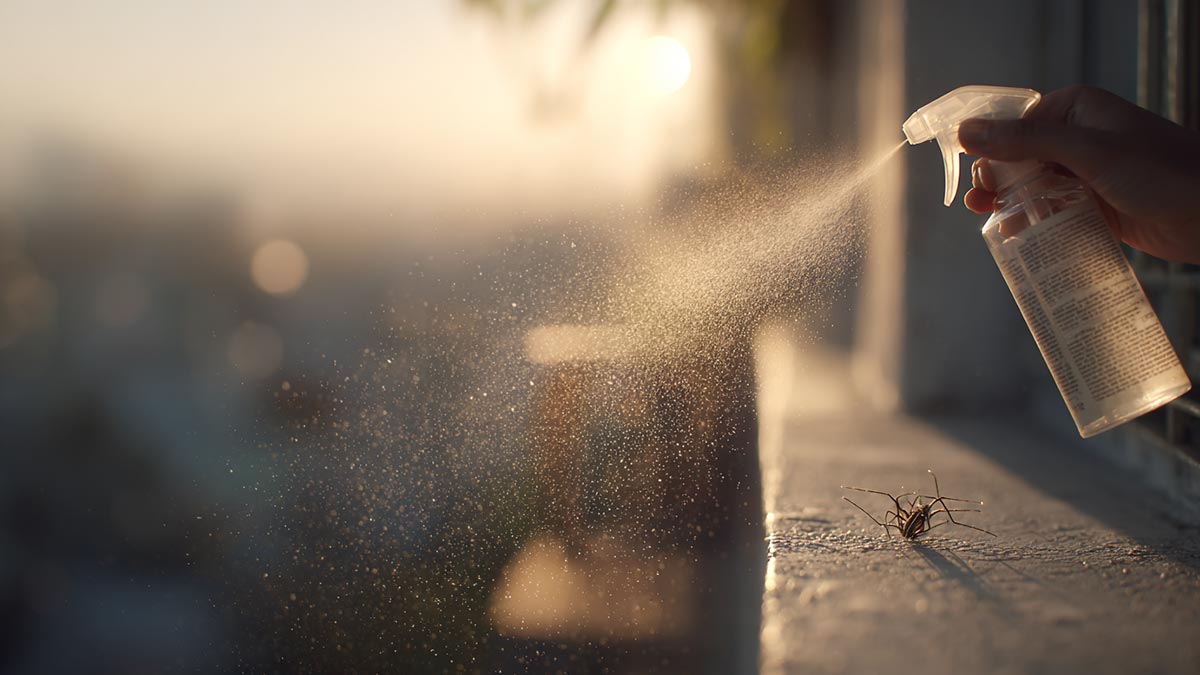
There is a surprisingly simple household trick quietly spreading across home improvement forums and social media feeds — and it involves nothing more than a spray bottle and a cheap bottle of white vinegar. Homeowners across the world are ditching harsh chemical pesticides in favour of this low-cost, low-effort method to discourage spiders from settling on balconies, around window frames, and in outdoor corners.
It sounds almost too straightforward to be effective. But the science behind it makes more sense than you might expect — and once you understand why spiders respond to vinegar the way they do, the whole approach clicks into place.
Why People Are Reaching for Vinegar to Repel Spiders
The core idea is elegantly simple: fill a spray bottle with diluted white vinegar, then mist the corners of your balcony, along railings, around door frames, and in any sheltered gap where spiders tend to build their webs.
Crucially, the goal here is not to kill spiders. The aim is to make certain spots feel unwelcoming enough that spiders choose to set up home somewhere else entirely.
Think of vinegar less as a pesticide and more as a natural “not welcome here” signal — one that persuades rather than poisons.
The active ingredient responsible for this effect is acetic acid, the compound that gives vinegar its characteristically sharp smell and sour taste. When applied to surfaces in sufficient concentration, acetic acid subtly alters the micro-environment that spiders rely on for movement, resting, and web construction. The pungent odour also appears to interfere with how many arthropods — spiders included — navigate their surroundings and select their preferred hiding spots. While dedicated scientific research on this specific application remains limited, pest control professionals widely acknowledge that strong-smelling substances can meaningfully disrupt spider behaviour.
How Vinegar Actually Affects Spider Behaviour
Spiders do not experience smell the way humans do. Instead, they detect chemical signals in their environment through tiny sensory hairs and receptors located on their legs and bodies. When a surface and the surrounding air are heavily saturated with a powerful substance like vinegar, that entire sensory landscape shifts — and for many spider species, the result is a strong preference to be somewhere else.
The critical distinction here is repellence versus elimination. Vinegar nudges spiders away from treated areas; it does not eradicate them. And for most household situations, that distinction is actually a good thing.
By choosing a repellent approach rather than a lethal one, you avoid disrupting the broader miniature ecosystem around your home. You are simply redirecting spider activity away from the spaces where you relax, dry laundry, or let children play — rather than wiping out a creature that plays a genuinely useful role in controlling insect populations.
Which Type of Vinegar Works Best?
Not every vinegar in your kitchen cupboard is equally suited to this task. When it comes to spraying on outdoor surfaces like concrete, timber decking, and metal railings, the choice of vinegar matters more than you might think.
Why White Distilled Vinegar Is the Clear Winner
- Colourless: Will not stain light-coloured walls, floor tiles, paving stones, or grout lines
- Affordable and widely available: Large bottles are inexpensive and stocked in virtually every supermarket
- Strong odour: The sharper smell maximises the repellent effect on spiders
By contrast, coloured vinegars — red wine vinegar, apple cider vinegar, balsamic — carry a real risk of leaving visible stains on balcony floors, outdoor cushions, plant leaves, and grout. On surfaces exposed to sunlight, heat, and moisture, those marks can prove stubbornly difficult to remove.
The practical consensus among households that have adopted this approach is clear: plain white distilled vinegar, diluted with an equal part of water, strikes the ideal balance between protecting your surfaces and maintaining enough acidity and odour to do the job.
How to Make and Use a Spider-Repellent Vinegar Spray
Setting up an effective vinegar barrier on your balcony takes only a few minutes. What makes the real difference is not strength but consistency — regular light applications outperform occasional heavy ones every time.
Step-by-Step Method
| Step | Action |
|---|---|
| 1 | Select a clean spray bottle dedicated solely to this mixture |
| 2 | Fill half the bottle with white distilled vinegar |
| 3 | Top up the remaining half with plain water and seal tightly |
| 4 | Shake gently to combine |
| 5 | Spray balcony corners, railing bases, door frames, window tracks, and the undersides of outdoor furniture |
On an open balcony exposed to sun and wind, the vinegar scent dissipates relatively quickly. Most users find they need to reapply every one to two days during warmer months when spider activity is at its peak.
Where to Focus Your Efforts
Spiders gravitate toward quiet, sheltered, undisturbed spaces. On a typical balcony, the highest-priority areas to spray include:
- Upper wall corners where the ceiling or roof overhang meets the wall
- Behind plant pots, storage boxes, and stacked items
- Beneath tables and chairs that rarely get moved
- Around sliding balcony door tracks and thresholds
- Cracks in brickwork and gaps around cables or pipework
Spraying directly onto any visible webs before wiping them away combines a cleaning action with the repellent barrier — a particularly efficient approach.
Is Vinegar Alone Enough to Keep Spiders Away?
Vinegar is a genuinely useful tool — but it is not a standalone miracle solution. Spiders are fundamentally attracted to two things: food and shelter. If your balcony offers an abundant supply of flying insects and plenty of undisturbed hiding spots, vinegar alone will find it difficult to tip the balance significantly.
Pest control specialists consistently recommend pairing vinegar with practical housekeeping habits that address the underlying conditions attracting spiders in the first place.
Habits That Make Vinegar Significantly More Effective
- Regular sweeping and wiping: Remove webs, dust corners, and clean railings and window frames on a weekly basis
- Reducing clutter: Eliminate piles of cardboard, unused furniture, stored timber, or any items pressed against balcony walls — these are prime spider real estate
- Rethinking outdoor lighting: Bright lights after dark attract moths and mosquitoes, which in turn draw spiders hunting for an easy meal. Dimming or switching off balcony lights earlier makes a noticeable difference
- Maintaining drainage: Clear leaves and debris from balcony drains, where insects breed and gather
- Installing mesh screens: Fitting fine mesh screens on balcony doors and windows creates a physical barrier against both spiders and the insects they prey on
The principle is straightforward: a clean, uncluttered, insect-unfriendly balcony naturally attracts fewer spiders. Vinegar works best as one component of that broader maintenance routine — not as a substitute for it.
Surface Safety: What to Watch Out For
Because vinegar sits comfortably in the kitchen and the cleaning aisle, it is easy to forget that it is still an acid. Applied repeatedly over time to certain materials, it can cause gradual surface damage that is worth taking seriously.
Surfaces That Require Extra Care
- Natural stone — marble, limestone, and certain slate varieties are particularly vulnerable to acid erosion
- Polished or sealed timber decking — repeated acid exposure can dull the finish or lift sealants
- Decorative metals — especially those already showing signs of corrosion
- Delicate outdoor textiles — cushion covers, outdoor curtains, and fabric sun shades may fade or weaken
Before treating an entire floor or wall surface, test a small, inconspicuous patch first. If the colour shifts or the finish dulls after the spray dries, reduce the dilution ratio or consider an alternative approach for that particular material.
From a safety perspective: avoid spraying near eyes or mouth, store the bottle out of reach of children, and apply when pets are indoors — many animals find the smell of vinegar deeply unpleasant.
How Vinegar Compares to Other Natural Spider Deterrents
Vinegar is one of several chemical-free approaches popular with households looking to reduce their reliance on synthetic pesticides.
Aromatic Plants
Certain plant species placed near balcony doors and windows are frequently cited as mild insect and spider deterrents. Mint, lavender, and citronella are among the most commonly recommended — they contribute pleasant scent and greenery while subtly reducing the attractiveness of your outdoor space to insects, and by extension, to spiders hunting them.
Essential Oils
Essential oils — particularly tea tree and eucalyptus — appear regularly in natural pest control discussions. However, they come with important caveats: many are skin irritants, and several are genuinely toxic to cats and dogs. Vinegar, by comparison, is considerably safer, better understood, and far more affordable for regular outdoor use.
Real-World Scenarios: How This Works in Practice
Scenario One — City Flat with a Narrow Balcony: A resident uses their compact balcony for drying laundry, has fairy lights running most evenings, and keeps several potted plants in one corner. The warm, slightly humid environment becomes a magnet for moths. Spiders follow the moths and establish webs above the clothesline.
A combined approach delivers results: reducing the hours the lights run, clearing webs weekly, placing mint or lavender pots near the door, and applying a quick vinegar spray to upper corners every other evening. Over several weeks, web-building activity gradually shifts away from the laundry area toward quieter, higher sections of the building exterior.
Scenario Two — Ground-Floor Balcony Near a Garden: Dense shrubs and stacked timber nearby provide a constant source of incoming spiders. Vinegar can still create a useful short-term barrier along railings and door thresholds, but reorganising garden storage and managing clutter will ultimately have a greater long-term impact on spider numbers than any spray alone.
When Vinegar Is Not the Right Answer
There are circumstances in which the spray bottle should not be your primary line of defence. If you are noticing unusually large spiders on a regular basis, frequent sightings of spiders indoors, or individuals with markings that resemble dangerous or venomous species known to your region, professional advice becomes important.
In those situations, vinegar can still play a supporting role as a daily deterrent at entry points and along balcony perimeters. However, any genuine infestation — or any credible risk of venomous bites, particularly in households with young children or pets — warrants proper species identification, safe removal, and where necessary, professional pest control intervention.
Conclusion
Spraying white vinegar on your balcony is one of those rare household tips that is simultaneously simple, affordable, chemical-free, and genuinely backed by reasonable logic. It works not by harming spiders but by making your balcony feel like an unappealing neighbourhood — altering the sensory environment that spiders rely on to navigate and settle.
- → Nationwide Listeria Recall in France: What You Need to Know About Contaminated Pâtés and Cold Meats in 2026
- → The Unexpected Household Hack That Keeps Wet Floors and Entryways Clean in 2026
- → The Hair Transformation Women Over 50 Are Talking About in 2026: What Really Works for Thinning Hair
- → Marseille’s Mistral District in Crisis: Arrests, Secrets, and a Growing Mystery in 2026
- → Massive 35-Meter Waves in the Pacific: What Scientists Are Discovering in 2026
- → Why You’re Receiving More Spam Calls in 2026: The Hidden Reasons and How to Stop Them
- → The Express Chignon: A Quick and Elegant Hairstyle for Busy Women in 2026
Used on its own, it will take the edge off spider activity in treated areas. Used as part of a broader routine — regular cleaning, reduced clutter, smarter lighting choices, and the occasional aromatic plant near the door — it can make a meaningful and lasting difference to how many eight-legged visitors share your outdoor space.
The key is realistic expectations and consistency. A light spray every couple of days, focused on the corners and sheltered spots where spiders naturally congregate, will outperform a single heavy application every few weeks. Keep a bottle mixed and ready, build the habit into your regular balcony maintenance, and enjoy your outdoor space with considerably fewer uninvited guests.
Frequently Asked Questions (FAQs)
Q1: Does spraying vinegar actually keep spiders away, or is it just a myth? It is not a myth, though it is also not magic. Vinegar’s acetic acid and strong odour alter the sensory environment spiders use to navigate and choose resting spots. Most pest control professionals acknowledge that pungent smells can disrupt spider behaviour, making treated areas less attractive. Results vary by species and balcony conditions, but many households report a noticeable reduction in web-building in treated areas.
Q2: How often do I need to reapply vinegar spray on my balcony? On an open balcony exposed to sun and wind, the scent fades quickly. During warmer months when spider activity peaks, reapplying every one to two days tends to produce the most consistent results. In cooler or more sheltered conditions, every three to four days may be sufficient.
Q3: Will vinegar damage my balcony floor or furniture? It depends on the material. White distilled vinegar is safe for most ceramic tiles, painted surfaces, and sealed concrete. However, natural stone such as marble or limestone, polished timber decking, and certain decorative metals can be damaged by repeated acid exposure. Always test a small hidden patch before treating larger surfaces.
Q4: Can I use apple cider vinegar instead of white vinegar? You can, but white distilled vinegar is generally preferred for outdoor use because it is colourless and less likely to stain surfaces. Apple cider vinegar carries a risk of leaving brownish marks on floors, grout, and outdoor textiles — particularly problematic on light-coloured balcony surfaces exposed to sun and moisture.
Q5: Is vinegar safe to use around pets and children? Vinegar is non-toxic and far safer than chemical pesticides for both children and most pets. However, many animals find the smell highly unpleasant, so it is advisable to apply the spray when pets are indoors. Keep the bottle stored out of children’s reach, and avoid spraying near eyes or mouths.




Leave a comment