

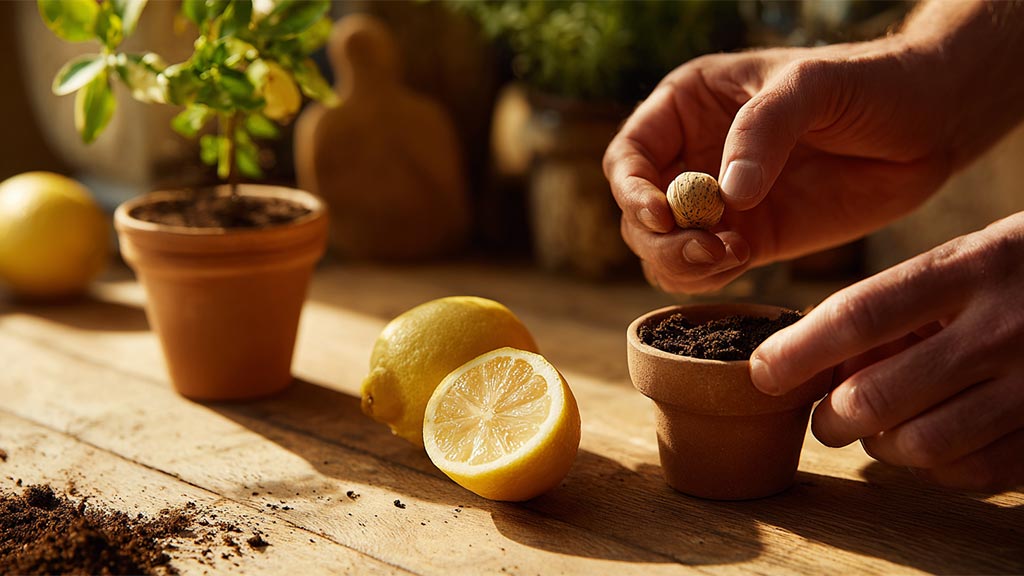
The Kitchen Habit Worth Reconsidering
Most people slice a lemon, use the juice, and sweep the seeds straight into the bin without a second thought. Across homes throughout Europe and beyond, however, a quiet and surprisingly rewarding trend is challenging that instinct — growing a lemon tree from scratch, starting with nothing more than the seeds left behind on the chopping board.
The result, a few months down the line, is a bright green sapling on the windowsill with a backstory you can trace directly to last Tuesday’s salad dressing. It sounds almost too simple to be real. Yet home growers in cooler climates, from the UK to Germany, are reporting exactly this — and wondering why they ever threw those seeds away in the first place.
Every lemon you squeeze is, in a very literal sense, holding several potential houseplants between your fingers.
Why Lemon Seeds Make Such a Good Beginner Project
The idea of growing tropical fruit trees indoors tends to conjure images of greenhouses and specialist equipment. Lemons, however, are genuinely cooperative plants. They tolerate pruning well, grow at a reasonable pace for a woody species, and respond visibly to good care — new leaves appear in satisfying bursts, stems gradually thicken, and healthy foliage takes on a deep, glossy sheen.
Crucially, the process demands very little from the grower:
- No greenhouse or special growing equipment
- No elaborate propagation techniques
- No significant budget or dedicated space
A bright windowsill, a bag of seed-starting compost, and a reasonable amount of patience are genuinely sufficient to get started. For anyone looking for a low-barrier gardening project with long-term rewards, few options are more accessible.
Choosing the Right Lemon: Not All Seeds Are Equal
Success begins at the supermarket, well before any seed touches soil. The type of lemon you select has a direct bearing on whether germination actually happens.
Why Organic Lemons Give You Better Odds
Seeds from conventionally grown lemons frequently fail to germinate, and not always for obvious reasons. Pre-harvest chemical treatments and early harvesting can leave seeds underdeveloped — the embryo inside may be too weak or no longer viable by the time the fruit reaches the shop shelf.
For seed-starting purposes, choosing an organic lemon is less about ethical preference and more about practical germination insurance. Organic fruit is typically harvested closer to full ripeness, which increases the probability that seeds have fully matured inside. That translates directly into better sprouting rates once warmth and moisture are introduced.
How to Spot a Viable Seed
Once the lemon is cut open, a quick visual and tactile check helps identify the most promising candidates:
- Plump and rounded, not flat, shrivelled, or thin
- Surface intact, with no visible cuts, dark spots, or discolouration
- Firm to the touch, rather than soft or hollow-feeling
Since germination rates vary even among healthy seeds, most experienced growers start five or six at once. Some will rot, some will remain dormant, but one or two will typically push ahead strongly. Starting several simultaneously improves your overall chances considerably.
The Preparation Step Most People Skip
The difference between a seed that sprouts within two weeks and one that sits dormant for months often comes down to a brief preparation process that takes just a few minutes.
Cleaning Away the Residue
Freshly extracted seeds carry a coating of fruit pulp and sugary juice. In the warm, moist conditions required for germination, this residue creates an ideal environment for mould and fungal growth. A thorough rinse under lukewarm water removes most of the sticky layer, and patting the seeds dry with kitchen paper before planting reduces the risk further.
Removing the Outer Seed Coat
This is the step that separates casual attempts from consistently successful ones. Each lemon seed is enclosed in a thin, pale outer casing that functions essentially as a waterproof barrier. While this coating protects the seed in nature, it slows down moisture absorption during indoor germination.
Many growers soften this casing by soaking the seeds in water for several hours, then gently peel it away using a fingernail or a pair of tweezers. The result is a slightly darker, smoother seed with direct access to moisture — one that typically begins showing signs of life noticeably sooner than an unprepared seed.
Think of it as removing the seed’s raincoat so it can actually feel the water.
Two Straightforward Methods for Getting Seeds to Sprout
Once cleaned and prepared, seeds require two things above all else: consistent warmth and steady moisture. There are two widely used approaches, each with its own advantages.
- → Nationwide Listeria Recall in France: What You Need to Know About Contaminated Pâtés and Cold Meats in 2026
- → The Unexpected Household Hack That Keeps Wet Floors and Entryways Clean in 2026
- → The Hair Transformation Women Over 50 Are Talking About in 2026: What Really Works for Thinning Hair
- → Marseille’s Mistral District in Crisis: Arrests, Secrets, and a Growing Mystery in 2026
- → Massive 35-Meter Waves in the Pacific: What Scientists Are Discovering in 2026
- → Why You’re Receiving More Spam Calls in 2026: The Hidden Reasons and How to Stop Them
- → The Express Chignon: A Quick and Elegant Hairstyle for Busy Women in 2026
Method One: The Paper Towel Technique
This method is popular precisely because it allows you to monitor progress without disturbing the seeds:
- Lay the prepared seeds on a damp — not soaking — paper towel
- Fold the towel over the seeds and place it inside a resealable plastic bag
- Store the bag somewhere warm and dark, such as the top of a kitchen cupboard
- Check every few days to ensure the towel has not dried out completely
Within one to two weeks, small white root tips typically emerge. Once visible, each sprouted seed can be transferred carefully into a small pot of seed compost, positioned with the root pointing downward.
Method Two: Direct Sowing Into a Pot
For growers who prefer a more straightforward approach with less handling:
- Fill a small pot with light, well-draining compost
- Plant each prepared seed approximately 1 cm beneath the surface
- Moisten the compost and cover the pot with clear plastic wrap or a small lid to maintain humidity
- Place in a warm, bright location, away from harsh direct midday sun
Green shoots should begin appearing within a few weeks under suitable conditions. You won’t be able to watch the roots developing, but the eventual appearance of those first tiny leaves is a genuinely satisfying moment.
Caring for Your Lemon Seedling as It Grows
Once a seedling has developed its first true leaves and a visible root system, it graduates from experiment to permanent houseplant. The ongoing care requirements are straightforward, but consistency matters.
Selecting the Right Pot and Compost
A pot measuring around 8 to 10 centimetres in diameter suits a young plant well. The single non-negotiable feature is a drainage hole at the bottom — citrus roots are highly sensitive to waterlogged conditions, particularly in centrally heated homes where moisture evaporation is unpredictable.
Standard potting compost blended with sand or perlite creates the crumbly, free-draining structure young citrus roots need. Purpose-formulated citrus compost mixes, available at most garden centres, are designed with exactly this in mind.
Light, Water, and Temperature
Lemon trees are fundamentally sun-loving plants, and indoor specimens are no different:
- Light: Position the pot at the brightest available window — ideally south or west-facing. In regions with overcast winters, a small LED grow light can make a visible difference to leaf colour and overall health
- Water: Let touch guide your watering rather than a fixed schedule. Press a finger roughly two centimetres into the compost — if it feels dry at that depth, water thoroughly until it drains from the bottom. If it still feels slightly moist, wait another day or two
- Temperature: Standard indoor temperatures suit lemon trees well. Avoid positioning them directly above radiators, where the air becomes excessively dry, or near draughty windows that expose leaves to cold air overnight
How Growth Unfolds Over Time
| Stage | Approximate Timeframe | What to Look For |
|---|---|---|
| Germination | 2 to 4 weeks | Root tip emerges, followed by a pale upward shoot |
| First true leaves | 4 to 6 weeks | Glossy, oval citrus leaves replace initial seed leaves |
| Young plant (around 15 cm) | 6 to 12 months | Strengthening stem, side shoots forming, regular feeding begins |
| Small indoor tree (around 50 cm) | 2 to 3 years | Periodic repotting required, pruning to shape, woody base developing |
What to Realistically Expect From a Seed-Grown Lemon Tree
Social media images showing potted lemon trees laden with fruit can set unrealistic expectations, particularly for growers in cooler northern climates. Seed-grown trees develop along a slower, less predictable timeline than commercially grafted varieties.
Primarily a Foliage Plant — With Fragrant Bonuses
In a typical living room in the UK or northern parts of the United States, a lemon grown from seed is unlikely to produce fruit for many years, if at all. Reliable fruiting requires sustained warmth, abundant direct sunlight, and consistent pollination — conditions most indoor environments cannot replicate over the long term.
The rewards arrive differently. Mature lemon leaves release a powerful citrus fragrance when gently brushed. The plant gradually develops into a glossy, architecturally attractive presence in a room. And for many owners, the fact that this living, growing tree began as a throwaway pip from a supermarket purchase carries a value that no shop-bought plant can replicate.
Managing Your Lemon Tree Through Winter
The colder months introduce specific challenges that require adjusted care:
- Reduce watering frequency — with less light available, the plant uses moisture more slowly and the compost remains wet for longer, making overwatering the primary winter risk
- Maximise available light — move the pot to the brightest room in the house, even if that means relocating it temporarily
- Avoid cold draughts — a slightly cooler but well-lit bedroom window often suits winter lemon trees better than a centrally heated living room with fluctuating temperatures
Dry indoor heating also creates favourable conditions for common pests including spider mites and scale insects. Checking the undersides of leaves regularly allows you to catch infestations early. Mild cases typically respond well to wiping affected areas with a diluted mild soap solution, or to neem oil-based treatments.
Why This Small Project Resonates So Deeply
Growing a lemon tree from a single seed is not purely a gardening exercise. It transforms something ordinarily destined for the bin into a long-lived, living feature of a home. That small act carries a disproportionate sense of meaning for many people.
Parents use it as a tangible, hands-on way to show children where plants actually come from. Flat-dwellers use it to introduce a hint of Mediterranean warmth into compact urban spaces at virtually no cost. Busy professionals find in it a slow, grounding counterbalance to the pace of daily working life — something that grows quietly and rewards patient attention.
There is one important trade-off worth acknowledging honestly: a seed-grown lemon tree will rarely produce the kind of fruit a grafted variety reliably delivers. For anyone primarily interested in home-grown citrus fruit, a grafted dwarf lemon tree from a garden centre is the more dependable route. What a seed-grown tree offers in return, however, is something a grafted plant cannot provide — the experience of having raised it from its very first moment of life, from that overlooked pip on the chopping board to a confident, fragrant indoor tree.
Conclusion
In a world where convenience culture encourages us to discard things almost reflexively, the humble lemon seed offers a quiet but genuine alternative. The entire process — from selecting the right organic lemon, to preparing and germinating the seed, to eventually watching a small tree establish itself on the windowsill — is accessible to almost anyone, regardless of gardening experience or available space.
The lemon tree you grow may never produce supermarket-quality fruit. But it will fill a corner of your home with lasting greenery and fragrance, spark conversations, and serve as a daily reminder of what can emerge from something most people throw away without a second thought.
Next time you reach for the bin after squeezing a lemon, pause for just a moment. Those seeds represent considerably more potential than they appear to.
Frequently Asked Questions
How long does it take for a lemon seed to germinate indoors? With proper preparation — cleaning, soaking, and removing the outer seed coat — germination typically occurs within two to four weeks under warm, moist conditions. Unprepared seeds may take considerably longer or fail to sprout at all.
Can I grow a lemon tree indoors without a garden? Absolutely. Lemon trees are well-suited to indoor growing and require only a bright windowsill, well-draining compost, and consistent watering. No outdoor space, greenhouse, or specialist equipment is necessary.
Will my seed-grown lemon tree actually produce fruit? Potentially, but not quickly and not reliably in cooler climates. Seed-grown lemon trees can take a decade or more to fruit indoors, and they require sustained warmth and direct light. For reliable fruiting, a grafted dwarf citrus variety is a more practical choice.
Why is it recommended to use organic lemons specifically? Conventionally grown lemons are often harvested before full ripeness and may have been treated with chemicals that affect seed viability. Organic lemons tend to be harvested at a later, riper stage, which increases the likelihood that seeds are fully developed and capable of germinating successfully.
What are the most common reasons lemon seeds fail to grow? The most frequent causes are using seeds from non-organic or overly processed fruit, skipping the preparation and cleaning steps, insufficient warmth during germination, inconsistent moisture levels, and overwatering once the seedling has established.




Leave a comment