

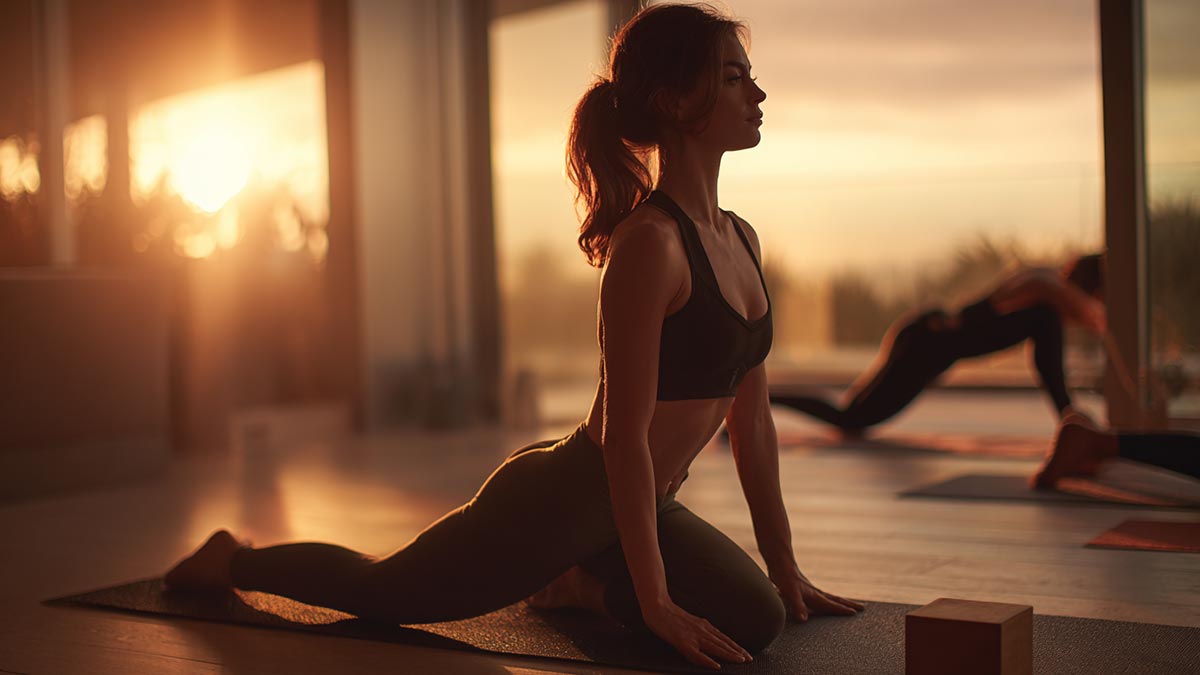
Most people experience hip stiffness at some point — whether it shows up as difficulty sitting cross-legged, an inability to squat deeply, or nagging lower back discomfort. What many don’t realize is that restricted hip mobility affects far more than just comfort. It influences posture, spinal health, and even how well you perform physically.
The good news? A targeted yoga practice can systematically release that tension. Below are 14 highly effective yoga poses designed to open tight hips, restore range of motion, and help you move with greater ease and freedom.
Understanding the Hip Hinge: The Foundation of Hip Health
Before diving into specific poses, it helps to understand a foundational movement concept: the hip hinge. This is the mechanics behind how the body bends at the hip joint rather than rounding through the spine — and it matters for everything from lifting objects safely to executing athletic movements efficiently.
The key principle is simple: initiate movement from the hips, not the back. Developing this awareness protects the lumbar spine from unnecessary stress and lays the groundwork for improved hip function.
The 14 Best Yoga Poses for Tight Hips
Pose 1: Downward-Facing Dog
A staple of most yoga sequences, Downward-Facing Dog gently lengthens the hip flexors and hamstrings while simultaneously building upper-body and core strength. From a tabletop position, press firmly through the palms and lift the hips upward and back into an inverted V-shape.
Rather than forcing the heels to the floor, focus on feeling a deep, sustainable stretch along the backs of the legs and through the front of the hips. Slightly bending the knees can ease tension in tight calves and hamstrings, allowing the hips to decompress more naturally.
Pose 2: Pigeon Pose
Often called the “king of hip openers,” Pigeon Pose delivers a deep, targeted stretch to the glutes, hip flexors, and external rotators — muscle groups that commonly become shortened from prolonged sitting or repetitive activity.
To enter the pose, begin on all fours. Slide one knee forward toward the same-side wrist, then extend the opposite leg behind you. Gradually lower your torso toward the mat to deepen the stretch. If the front hip lifts off the floor, a folded blanket or yoga block beneath it can make the pose more accessible and sustainable.
Pose 3: Warrior II
Warrior II builds hip-opening strength and stability simultaneously. Standing with feet wide apart, bend the front knee to approximately 90 degrees while keeping the back leg extended and the heel firmly grounded. Think of drawing your hips back as though lowering into a chair — this prevents the front knee from collapsing inward and distributes weight evenly.
Adjusting your stance width or the position of your front foot can significantly change the intensity, so experiment to find what works best for your body.
Pose 4: Frog Pose
Frog Pose targets the inner thighs and groin with a sustained, deep stretch that many other poses don’t reach. Starting on all fours, gradually walk both knees out to the sides while keeping the feet flat. Lower the hips toward the floor, supporting yourself on your forearms or hands.
Keep the knees aligned with the toes to protect the joint, and avoid collapsing inward. A blanket under the hips can reduce intensity if needed. Focus on slow, steady breathing to encourage the muscles to release gradually.
Pose 5: Butterfly Pose
Simple, accessible, and effective, Butterfly Pose can be practiced virtually anywhere. Sit on the floor, bring the soles of the feet together, and allow the knees to fall out to the sides. Gently apply downward pressure to the thighs using your elbows or hands.
Maintaining an upright spine is essential here — rounding the back can shift strain to the lower back rather than opening the hips. Props like a block or cushion under the knees make the pose more comfortable for those with significant tightness.
| Pose | Key Benefits | How to Enter |
|---|---|---|
| Downward-Facing Dog | Stretches hamstrings, opens hips, builds upper-body strength | From tabletop, press hands down and lift hips into an inverted V |
| Pigeon Pose | Deep stretch for glutes, hip flexors, and external rotators | Bring one knee forward from all fours, extend the other leg back |
| Warrior II | Opens hips, strengthens legs, builds balance | Wide stance, front knee bent, back heel grounded |
| Frog Pose | Targets inner thighs and groin | From tabletop, walk knees wide and lower hips toward floor |
Pose 6: Lizard Pose
Lizard Pose is a deep lunge variation that works the hips, groin, and inner thighs more intensely than a standard lunge. Begin in a high lunge with the front foot planted wide. Lower the back knee to the ground and walk the hands forward, letting the torso fold over the front leg.
A block under the back knee softens the pose for beginners, while variations in arm placement — hands flat, forearms on the floor, or arms extended overhead — can shift the stretch and challenge.
Pose 7: Reclined Bound Angle Pose (Supta Baddha Konasana)
This restorative pose is a gentler approach to hip opening, ideal for winding down or recovering after intense activity. Lie on your back, bring the soles of the feet together, and let both knees fall outward. Place blocks or rolled blankets under the knees for support.
- → Nationwide Listeria Recall in France: What You Need to Know About Contaminated Pâtés and Cold Meats in 2026
- → The Unexpected Household Hack That Keeps Wet Floors and Entryways Clean in 2026
- → The Hair Transformation Women Over 50 Are Talking About in 2026: What Really Works for Thinning Hair
- → Marseille’s Mistral District in Crisis: Arrests, Secrets, and a Growing Mystery in 2026
- → Massive 35-Meter Waves in the Pacific: What Scientists Are Discovering in 2026
- → Why You’re Receiving More Spam Calls in 2026: The Hidden Reasons and How to Stop Them
- → The Express Chignon: A Quick and Elegant Hairstyle for Busy Women in 2026
The focus here is less on intensity and more on surrender — allowing gravity and steady breathing to gradually melt tension from the hips and inner thighs over time.
Pose 8: Bound Angle Pose (Baddha Konasana)
The seated counterpart to Pose 7, this version adds the element of an upright spine. Sitting tall with feet pressed together and knees falling outward, use your elbows or hands to apply gentle downward pressure to the inner thighs.
Resist the urge to round the back to reach lower — an upright posture ensures the hip joints do the work, not the lumbar spine.
Pose 9: Squat Pose (Malasana)
The deep squat is one of the most functional hip-opening positions the body can assume, with benefits that transfer directly to lifting, athletic performance, and daily movement. Stand with feet hip-width apart, turn the toes out slightly, and descend as if sitting into a low chair, keeping the chest lifted and core gently engaged.
Those with limited ankle mobility can place a folded towel or block under the heels to allow the hips to descend more fully without compromising form.
Pose 10: Revolved Chair Pose
Revolved Chair Pose combines hip opening with spinal rotation and core engagement. From a standing squat position, rotate the torso to one side and hook the opposite elbow to the outside of the front thigh. Keep the hips level and square as you deepen the twist with each exhale.
Variations include reaching the top arm toward the ceiling or bringing one hand to the mat for added support.
| Pose | Key Benefits | How to Enter |
|---|---|---|
| Butterfly Pose | Hip and groin opener, promotes relaxation | Sit with soles of feet together, knees wide, press thighs gently down |
| Lizard Pose | Deep hip, groin, and inner thigh stretch | High lunge, lower back knee, fold torso over front leg |
| Squat Pose | Functional hip mobility and leg strength | Stand wide, toes out, lower hips toward floor while keeping chest up |
| Revolved Chair Pose | Hip opening plus spinal mobility and core activation | Chair pose with a lateral torso twist, elbow to opposite thigh |
Pose 11: Pigeon Pose Variation
For practitioners seeking a deeper experience of Pigeon Pose, walking the front foot further forward so the knee draws closer to the chest intensifies the stretch through the front hip and psoas muscle. Extending the back leg fully, with the foot flexed, adds another dimension to the pose.
As with all hip openers, props are encouraged — support under the front hip helps maintain alignment and prevents overstretching.
Pose 12: Revolved Crescent Lunge
This dynamic pose pairs the deep hip stretch of a high lunge with the mobility benefits of a thoracic rotation. From a high lunge, twist the torso toward the front leg and bring the opposite elbow to the outer edge of the front thigh.
The front knee should remain stacked directly above the ankle, and the back heel presses firmly into the floor. Lifting the top arm skyward or placing the hand on the mat are useful variations depending on your range of motion.
Pose 13: Supine Twist
A calming, restorative pose suitable for any level, the Supine Twist releases tension that accumulates in the hips, lower back, and shoulders. Lie on your back with arms extended out to the sides. Let both knees fall slowly to one side, keeping the opposite shoulder grounded.
Placing a cushion or block between the knees reduces strain on the lower back. Repeat on both sides, holding each for several slow, deep breaths.
Pose 14: Reclined Pigeon Pose
Also known as the Figure-Four Stretch, this supine variation offers the hip and glute benefits of Pigeon Pose in a more supported, accessible format. Lie on your back, cross one ankle over the opposite thigh, and gently draw both legs in toward the chest.
A yoga strap around the thigh or holding behind the leg with both hands can provide traction. A folded blanket under the hips adds comfort for longer holds. This is an excellent option for those with knee sensitivity who cannot access the traditional Pigeon Pose.
| Pose | Key Benefits | How to Enter |
|---|---|---|
| Pigeon Pose Variation | Deeper psoas and hip flexor stretch | Traditional pigeon with front foot walked forward |
| Revolved Crescent Lunge | Hip opening with spinal rotation | High lunge with opposite elbow hooking to front thigh |
| Supine Twist | Releases hips, lower back, and shoulders | Lie on back, drop knees to one side, hold both sides |
| Reclined Pigeon Pose | Accessible glute and hip opener, restorative | Figure-four shape on back, draw thighs toward chest |
Conclusion
Tight hips are one of the most common physical complaints, but they don’t have to be permanent. The 14 yoga poses covered in this guide — ranging from gentle restorative options like Reclined Bound Angle Pose to deeper, more active stretches like Pigeon Pose and Frog Pose — collectively address every major muscle group contributing to hip restriction. Whether you’re dealing with lower back discomfort, reduced athletic performance, or simply the stiffness that comes from a sedentary lifestyle, a consistent hip-opening yoga practice can produce meaningful and lasting improvements. Start slowly, use props freely, and listen to your body’s feedback at every step.
Frequently Asked Questions (FAQs)
Q: How often should I practice these hip-opening yoga poses? A: For noticeable improvement, aim to incorporate hip-opening poses 3–5 times per week. Even 10–15 minutes of focused practice daily can produce meaningful results over time.
Q: Can I practice these poses if I have a hip or knee injury? A: Many of these poses can be modified for injury, but it’s always best to consult a physiotherapist or qualified yoga teacher before practicing with an existing condition. Restorative options like Reclined Pigeon Pose and Supine Twist are typically the gentlest starting points.
Q: How long does it take to notice improved hip mobility? A: With consistent practice, many people notice reduced stiffness within 2–4 weeks. Significant changes in range of motion typically develop over 6–12 weeks of regular practice.
Q: What causes tight hips in the first place? A: Prolonged sitting, repetitive athletic movements, stress, and insufficient stretching are the most common contributors to hip tightness. The hip flexors and external rotators are particularly prone to shortening from sedentary habits.
Q: Is it normal to feel discomfort in these poses? A: A sensation of deep stretch is expected, but sharp, pinching, or shooting pain is not. If you experience the latter, ease out of the pose immediately and consider consulting a professional.



Leave a comment