

The Supermarket Moment That Changed Everything
There are things you believe for decades without ever questioning them — until one ordinary afternoon, between the yogurt shelf and the butter section, a young grocery clerk casually dismantles one of them.
That is exactly what happened to me at 61.
Reading glasses slipping down my nose, I reached for my usual carton of brown eggs. The young man stacking shelves nearby glanced over and said, almost as an afterthought, “You do know those are identical to the white ones, right?”
My instinct was to push back. “Brown eggs are healthier — everyone knows that.”
He shrugged. “My family keeps hens. Not really.”
And just like that, thousands of omelettes, three children’s birthday cakes, and countless Easter brunches suddenly felt built on a quiet misconception. If something as familiar as an egg could surprise me at 61, what else had I been accepting without question?
So What Actually Determines Egg Shell Colour?
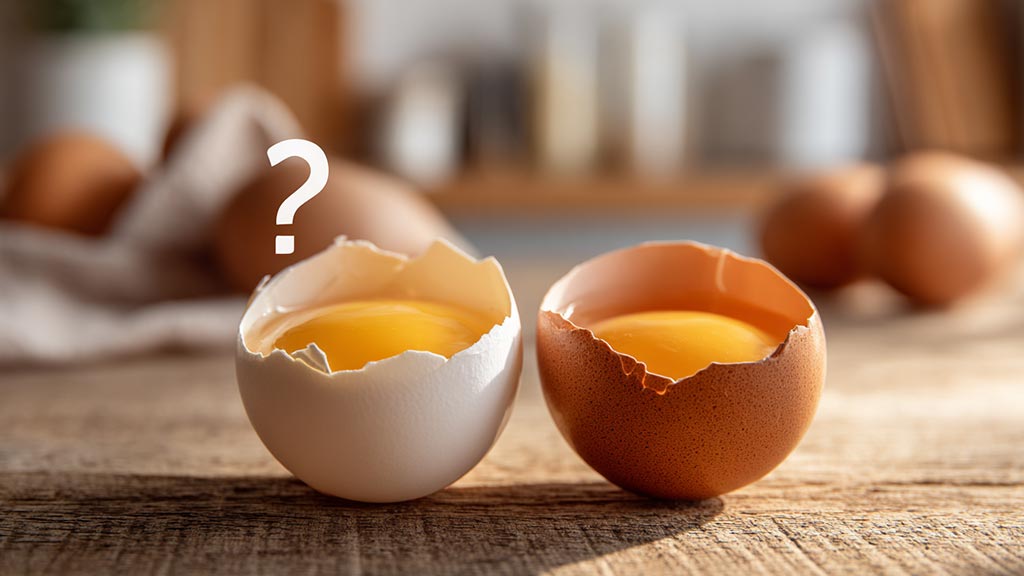
The first and most important fact is this: shell colour has nothing to do with the egg’s nutritional content. It has everything to do with the breed of hen that laid it.
Specifically, it comes down to genetics:
- Hens with white feathers and white earlobes typically produce white eggs
- Hens with red or brown feathers and darker earlobes generally lay brown eggs
That is the entire explanation. No special feed, no superior farming method, no added nutritional value — just a genetic trait as straightforward as eye colour in humans.
A Grandmother’s Farm That Proved the Point
The young supermarket worker shared a story about his grandmother’s small farm, where white Leghorn hens and large Rhode Island Reds lived side by side in the same yard. The Leghorns produced clean white eggs; the Rhode Islands laid deep brown ones, occasionally speckled.
- → Nationwide Listeria Recall in France: What You Need to Know About Contaminated Pâtés and Cold Meats in 2026
- → The Unexpected Household Hack That Keeps Wet Floors and Entryways Clean in 2026
- → The Hair Transformation Women Over 50 Are Talking About in 2026: What Really Works for Thinning Hair
- → Marseille’s Mistral District in Crisis: Arrests, Secrets, and a Growing Mystery in 2026
- → Massive 35-Meter Waves in the Pacific: What Scientists Are Discovering in 2026
- → Why You’re Receiving More Spam Calls in 2026: The Hidden Reasons and How to Stop Them
- → The Express Chignon: A Quick and Elegant Hairstyle for Busy Women in 2026
Whenever visitors came looking for “authentic farm eggs”, they instinctively pointed to the brown ones and paid more without hesitation — certain they were getting something more rustic, more nourishing, more genuine.
His grandmother would return to the kitchen and crack both colours into the same pan. Nobody ever noticed a difference in flavour. Not once.
What Nutritional Science Actually Says
Scientists and dietitians have examined this question extensively, and the conclusion is consistent: white and brown eggs are nutritionally almost identical.
The protein content, fat composition, vitamin profile, and mineral levels are comparable across both shell colours. What does create a meaningful difference in egg quality is the hen’s diet and living conditions — not the pigment of its shell.
A genuinely free-range hen that forages on grass and insects may produce eggs with a slightly deeper, richer yolk colour. But here is the critical point most people miss: you can find free-range white eggs and factory-farmed brown eggs. Shell colour is a visual characteristic — not a welfare or health indicator.
How to Actually Choose Better Eggs
If shell colour tells you nothing useful, what should you look at instead? The answer is already printed on every single egg — a small numerical code that reveals far more than any packaging ever will.
Decoding the Egg Number
The first digit stamped on each egg indicates the farming method:
- 0 — Organic
- 1 — Free-range
- 2 — Barn-raised
- 3 — Caged
This single number carries more meaningful information than any colour, carton illustration, or marketing claim. Prioritise 0 or 1 if your budget allows. If it does not, making an informed choice based on this code already puts you ahead of most shoppers.
Additional Practical Tips
- Always check the best-before date
- Store eggs in their original carton, pointed end facing down
- Trust your senses — freshness matters more than labels
- Choose the price point and ethical standard that genuinely fits your life
The Role of Marketing in Shaping Egg Beliefs
One of the least-discussed aspects of the brown egg premium is how deliberately it has been constructed. The food industry is acutely aware that many consumers associate brown eggs with countryside living, wholesome farming, and natural goodness.
Walk down any supermarket aisle and you will see it in action — earthy-toned packaging, hand-drawn illustrations of hens in open fields, language evoking rural simplicity — sometimes on eggs sourced from considerably crowded barns.
White eggs, meanwhile, tend to appear on baking product packaging or in bulk value ranges, which unconsciously positions them as the lesser, more industrial option.
As one nutritionist put it during a routine consultation: “People hold onto the brown equals healthy idea because it reassures them. But the real difference comes from the hen’s life, not from the shell. When you understand that, you shop with your head rather than with nostalgia.”
What Shifts When You Know the Truth
The day you genuinely let go of the assumption that brown eggs are automatically superior, something quietly changes in how you move through a supermarket.
You might still choose brown eggs — out of habit, aesthetic preference, or simply because they look attractive sitting in a bowl on the kitchen counter. That is entirely reasonable. You might equally switch to white eggs when they are more affordable, knowing that for a midweek omelette, the difference is genuinely imperceptible.
The real gain is clarity about what you are actually paying for — is it the hen’s welfare, the farming method, the quality of feed, or simply a shell colour and a charming pastoral image printed on cardboard?
When this comes up in conversation, the pattern is always the same: a pause, a small laugh, and then a confession. Many people admit they also believed brown eggs were somehow more complete or nutritious. Some insist they can taste the difference — until a blind tasting at brunch quietly undermines their confidence.
Knowledge does not diminish the pleasure of a perfectly soft-boiled egg. It simply removes the faint, unnecessary guilt that comes from decisions shaped by marketing rather than fact.
Conclusion
An egg is one of the most ordinary objects in any kitchen — and yet it turns out to be a surprisingly effective mirror for how many everyday assumptions go unexamined. The belief that brown eggs are healthier, more natural, or more nutritious than white eggs is one of the most widespread and commercially reinforced food myths in modern grocery shopping.
The truth is straightforward: shell colour reflects hen breed, nothing more. What genuinely influences egg quality is how the hen lived, what she ate, and the farming conditions she experienced. A single digit printed on the egg itself communicates all of that — if you know to look for it.
At 61, one offhand comment from a stranger reshuffled something small but real. If a carton of eggs can do that, it is worth wondering what else in the daily shopping basket might deserve a second, more honest look.
Frequently Asked Questions
Are brown eggs genuinely healthier than white eggs? From a nutritional standpoint, they are nearly identical. Protein, fat, vitamins, and mineral content are comparable between both. What influences egg quality more meaningfully is the hen’s diet and living conditions — factors entirely unrelated to shell colour.
Do brown eggs actually taste different? Controlled blind tastings consistently show that most people cannot reliably distinguish between them. Flavour differences, when they do exist, are linked to freshness and the hen’s feed — not to the colour of the shell.
Why do brown eggs typically cost more? The breeds that lay brown eggs tend to be larger and consume more feed, which slightly increases production costs. Beyond that, packaging and branding that evoke rustic, natural imagery are used to justify a higher retail price.
Which eggs should I choose if animal welfare matters to me? Focus on the numerical code printed directly on each egg rather than the shell colour or packaging design. A code of 0 (organic) or 1 (free-range) indicates better welfare conditions. Shell colour reveals nothing about how the hen was raised.
How can I test whether an egg is still fresh at home? The water float test is reliable and simple: place the egg gently in a bowl of cold water. A fresh egg sinks and lies flat on its side. An older egg stands upright on the bottom — use it soon. An egg that floats should not be eaten.



Leave a comment